 ultimate-guide
Is Acupuncture Backed by Science? A Beginner's Guide
Table of Contents
- Is Acupuncture Backed by Science? Understanding the Evidence
- How Acupuncture Works: Traditional Chinese Medicine Meets Modern Research
- What Clinical Trials and Systematic Reviews Actually Say
- Acupuncture for Menopause Symptoms: What the Evidence Shows
- NHS Acupuncture Guidelines: Where It Fits in UK Care
- Acupuncture Safety for Needle Phobia: What Beginners Should Know
- Conclusion: Making an Informed Choice About Acupuncture
- Frequently Asked Questions
Last Updated: October 3, 2026
Is Acupuncture Backed by Science? Understanding the Evidence
Is acupuncture backed by science? At Lee Chinese Style Therapy Ltd, we work with people across East Yorkshire who arrive sceptical, curious, or simply desperate for relief after everything else has failed. This guide sets out what the evidence actually shows, where the gaps remain, and how to judge whether treatment is worth trying. (Source: a comprehensive systematic review and meta-analysis)
The short version: acupuncture is no longer dismissed as pure placebo by mainstream researchers. It has moved from the margins into clinical guidelines for certain types of pain, and it is now being studied seriously within evidence-based medicine rather than outside it.
How Acupuncture Works: Traditional Chinese Medicine Meets Modern Research
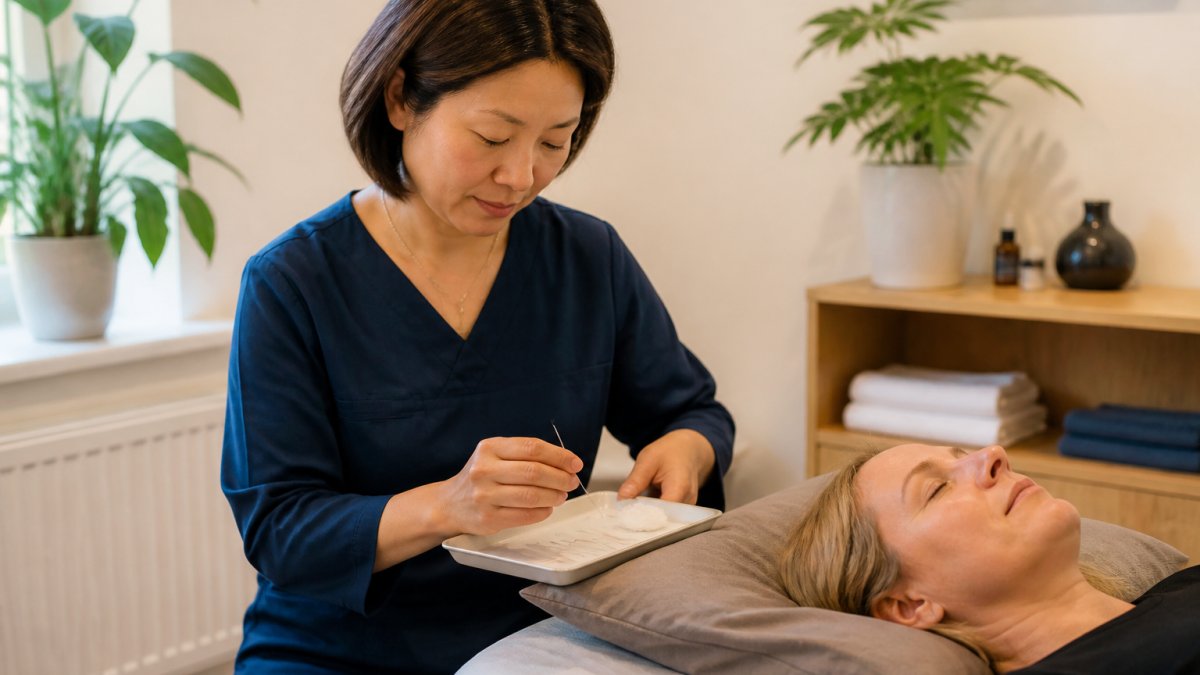
Acupuncture is a therapeutic intervention in which fine, sterile needles are inserted at specific points on the body to influence pain, circulation, and nervous system activity.
The two frameworks describe the same practice in different languages. You do not have to accept one to benefit from the other.
The Role of Qi and Meridians in Traditional Practice
In Traditional Chinese Medicine, qi is understood as the body's vital energy, and meridians are the channels it travels along. Acupuncture points sit at specific locations on those channels, and a practitioner selects them based on your overall pattern of symptoms rather than a single diagnosis.
A common mistake is treating this as mysticism rather than a complete clinical system. It has its own diagnostic logic, refined over centuries, and practitioners trained in it assess pulse, tongue, and history before needling.
What Brain Imaging and Nervous System Studies Show
Brain imaging research suggests acupuncture produces measurable changes in regions involved in pain processing. Studies point to nervous system modulation, including endorphin release and altered activity in pain-perception networks.
What most guides miss is that these findings explain how a needle might reduce pain. They do not, on their own, prove it works better than a placebo. That question needs clinical trials.
What Clinical Trials and Systematic Reviews Actually Say
This is where the honest answer to 'is acupuncture backed by science?' really lives. Not in brain scans, not in tradition, but in what happens when you pool hundreds of trials together and look at the pattern.
Systematic reviews and meta-analyses, the highest tier of medical evidence, generally find that acupuncture outperforms no treatment for several chronic pain conditions. The most consistent findings sit in four areas:
- Chronic low back pain, moderate-quality evidence of benefit compared with usual care
- Neck pain, similar pattern, with effects lasting beyond the treatment period in some trials
- Osteoarthritis of the knee, measurable reductions in pain and improvements in function
For these conditions, the evidence is strong enough that mainstream clinical guidelines now include acupuncture as an option. That would have been unthinkable thirty years ago.
Where the Evidence Gets Complicated
When researchers compare real acupuncture against sham acupuncture, where needles are retractable, placed at non-traditional points, or inserted very shallowly, the gap narrows. Real acupuncture still tends to perform better, but the difference is modest and inconsistent across studies.
Two things follow from this, and both can be true at once:
- Some of the benefit is context. The consultation, the ritual, the expectation, the calm room, these are not nothing. They are part of why any treatment works.
- Some of the benefit is not context. Needle placement, depth, and the specific points chosen do change outcomes in several trials. If it were pure placebo, sham would match real acupuncture exactly. It does not.
What most guides gloss over is that this is the core of the scientific dispute. It is not 'does acupuncture work?', it is 'how much of the effect is the needle, and how much is the surrounding care?' That is a genuinely interesting question, and the research is still working it out.
What the Evidence Does Not Support
Anyone claiming acupuncture is proven for everything is overstating it. The evidence for conditions like infertility, weight loss, or general 'detoxification' is weak, preliminary, or absent. A good practitioner will tell you this rather than promise miracles.
Anyone claiming acupuncture is pure pseudoscience is also ignoring the trials. The position that survives contact with the evidence is narrower and more useful: acupuncture has real, measurable benefits for specific pain conditions, a meaningful placebo component, and a mechanism that is partly understood and partly still being mapped.
"The evidence base has shifted. Acupuncture is now recommended in several national guidelines for chronic pain, which would have been unthinkable thirty years ago."
How to Read an Acupuncture Study Yourself
If you want to judge the evidence for your own condition, here is a simple framework:
- Look for systematic reviews first, not single trials. One study can be misleading; a review of twenty is harder to dismiss.
- Check what it was compared against. Acupuncture versus nothing is a low bar. Acupuncture versus sham, or versus standard care, tells you more.
- Check the condition. Evidence for back pain does not transfer to insomnia or anxiety.
This is the same approach a GP or physiotherapist would take. You do not need a medical degree to apply it, just a willingness to ask 'compared with what, and for whom?'
Acupuncture for Menopause Symptoms: What the Evidence Shows
Menopause is where the conversation around acupuncture has changed most, and for good reason. Hot flushes, night sweats, mood swings, brain fog, and disturbed sleep can disrupt work, relationships, and confidence for months or years. Hormone replacement therapy (HRT) helps many women, but it is not suitable for everyone, some have medical reasons to avoid it, some find the side effects difficult, and some simply prefer a different approach.
This is where acupuncture has earned genuine attention, and where the evidence is more encouraging than many people realise.
What the Research Actually Reports
Trials and systematic reviews into acupuncture for menopause symptoms report consistent patterns:
- Reductions in hot flush frequency and severity, not elimination, but meaningful reduction for many women
- Improvements in sleep quality, particularly for women whose sleep is disrupted by night sweats
- Improvements in mood and emotional wellbeing, often reported alongside physical symptom changes
The effect is not a cure, and it is not instant. Most women notice changes over a course of treatment rather than after one session. Results vary between studies and between individuals, some respond strongly, some modestly, some not at all. But for women who have been told there is little that can be done, this is a real option worth discussing with a qualified practitioner.
Why the NHS Is Increasingly Willing to Look at Acupuncture
There is a shift worth noting, and it is a positive one. The NHS is increasingly willing to consider acupuncture as part of managing menopause symptoms where conventional options are limited, unsuitable, or not preferred.
What this means in practice:
- Ask your GP what is commissioned in your area. Some services offer acupuncture for menopause symptoms; others do not.
- Some NHS trusts and GP practices work with local acupuncturists or signpost patients to regulated practitioners.
- Integrated menopause clinics in some areas include acupuncture alongside other approaches.
If you are considering acupuncture for menopause symptoms, it is worth mentioning it to your GP, not to ask permission, but to check what is available locally and to make sure it is safe alongside anything else you are taking or being treated for.
A Realistic Picture of Treatment
A typical course for menopause symptoms involves weekly or fortnightly sessions over several weeks, with review points to assess whether it is helping. Some women notice changes after three or four sessions; others need longer. A good practitioner will be honest with you about what to expect and will not ask you to commit to an open-ended course without review.
What Acupuncture Does Not Replace
Acupuncture is not a substitute for HRT if HRT is working for you, and it is not a replacement for medical assessment of symptoms that could have another cause.
The positive message is this: you have more options than you may have been told, and acupuncture is one of them. The evidence is encouraging, the NHS is increasingly open to it, and for many women it makes a genuine difference to how they feel day to day.
NHS Acupuncture Guidelines: Where It Fits in UK Care
NICE, the body that produces clinical guidelines for the NHS, recommends considering acupuncture for some chronic pain conditions, including chronic primary pain, and it appears in guidance for tension-type headache and migraine prevention.
In practice, this means acupuncture sits inside UK care as an option for specific problems, not as a general-purpose treatment.
If you are considering treatment, ask about practitioner credentials, professional registration, and insurance before you book. A clinic that answers those questions clearly and without hesitation is a good sign.
Acupuncture Safety for Needle Phobia: What Beginners Should Know
Acupuncture safety for needle phobia starts with one fact: the needles are nothing like injections. They are extremely fine, often thinner than a human hair, and most people feel a brief tap or a dull ache rather than a sharp sting. Serious adverse events are rare when treatment is delivered by a trained practitioner using sterile, single-use needles.
If you are nervous, say so at the start. A good practitioner will adjust.
- Ask to see the needle before it is used, so you know what to expect
- Request fewer needles in the first session and build up gradually
- Try a seated position if lying down makes you feel exposed or anxious
Conclusion: Making an Informed Choice About Acupuncture
The evidence is real, but it is specific. Acupuncture is best supported for chronic pain and shows encouraging results for menopause symptoms, while the mechanism remains partly explained and partly unknown. That is not a weakness of the treatment.
If you have tried physiotherapy, medication, or injections without lasting relief, a properly qualified practitioner is worth a conversation. Lee Chinese Style Therapy Ltd offers acupuncture alongside Tui Na massage, Chinese medical cupping, and Gua Sha, with treatment planned around your history rather than a fixed protocol.
Frequently Asked Questions
Is acupuncture a science or pseudoscience?
Acupuncture sits at an interesting crossroads. The traditional framework of qi and meridians does not align with biomedical science, which is why some critics call it pseudoscience. However, clinical research using randomised controlled trials and systematic reviews has examined acupuncture for specific conditions. The evidence is strongest for chronic pain, tension headaches, and nausea. Rather than a simple yes or no, it is more accurate to say that certain applications have scientific support while the traditional explanations remain outside conventional biomedical understanding.
Does the NHS recommend acupuncture?
The NHS does recognise acupuncture for certain conditions. The National Institute for Health and Care Excellence (NICE) recommends acupuncture as a treatment option for chronic tension-type headaches and migraines. Some NHS pain services and GP practices refer patients to acupuncture for musculoskeletal pain. Availability varies by trust and region, so waiting lists can be long. Many people choose to see a qualified private practitioner instead. Your GP can advise on what is available locally and whether a referral is appropriate for your situation.
Can acupuncture help with menopause symptoms?
Research into acupuncture for menopause symptoms has grown in recent years. Some studies suggest it may help reduce hot flushes and improve sleep quality, though results across trials vary. The NHS has shown increasing willingness to explore acupuncture as part of a holistic approach to menopause management, particularly when HRT is not suitable or not preferred. Many women report feeling more in control of their symptoms after a course of treatment. If you are navigating menopause, a consultation can help you decide whether acupuncture fits your needs.
What should a beginner expect during their first acupuncture session?
Your first session usually begins with a detailed consultation about your health history, symptoms, and goals. The practitioner will explain what to expect and answer any questions. Needles are extremely fine, much thinner than those used for injections or blood tests. Most people feel little to no discomfort. You may feel a mild tingling, warmth, or heaviness around the needle site, which is normal. Sessions typically last 30 to 60 minutes. Many people find the experience deeply relaxing and often feel calm afterwards.