 how-to
Acupuncture for Menopause Hot Flushes: A 2026 Guide
Table of Contents
- How Acupuncture for Menopause Hot Flushes Works
- What the Evidence Says: Clinical Trials and Sham Acupuncture
- How Many Acupuncture Sessions for Hot Flushes?
- Acupuncture for Menopause Symptoms Beyond Hot Flushes
- Lifestyle Changes for Menopause Hot Flushes That Support Treatment
- Safety, Side Effects and Combining Acupuncture With HRT
- Self-Acupressure Techniques and What a Session Involves
- Frequently Asked Questions
Last Updated: September 30, 2026
How Acupuncture for Menopause Hot Flushes Works
Acupuncture for menopause hot flushes is a traditional Chinese medicine treatment that uses fine needles at set points on the body to calm the nervous system and reduce the frequency and severity of flushing episodes. At Lee Chinese Style Therapy Ltd, we see this as a practical option for women who want relief without relying only on medication.
The treatment targets vasomotor symptoms, the sudden heat, sweating and chills that disrupt sleep and daily life. Many women find the effects build over a course of sessions rather than after one visit.
The TCM View: Meridians and Hormonal Balance
In traditional Chinese medicine, hot flushes are seen as a sign of imbalance in the body's energy, or qi, along pathways called meridians. The aim is to restore hormonal balance by working on points linked to the kidney, liver and spleen systems.
This is a different lens from Western medicine, which frames flushes as a result of falling oestrogen and vasomotor instability. Both views can sit side by side. The TCM approach treats the whole person, not just the symptom.
What Modern Research Suggests About Nervous System Regulation
A common theory is that needling affects nervous system regulation, which in turn influences how the body controls temperature and blood flow. This may help explain why some women report fewer night sweats and better sleep.
The evidence is promising but not settled. Results vary between studies, and more high-quality trials are needed before anyone can call this a proven cure.
What the Evidence Says: Clinical Trials and Sham Acupuncture
The research picture is mixed, and that honesty matters. Several systematic reviews and randomized controlled trials have compared real acupuncture with sham acupuncture, where needles are placed at non-treatment points or do not pierce the skin.
Some trials show a therapeutic benefit for hot flushes and night sweats. Others show that sham acupuncture performs nearly as well, which points to a strong placebo effect. A pragmatic study, which looks at real-world results rather than strict lab conditions, often reflects how women actually respond in a clinic.
The National Institute for Health and Care Excellence guidance on menopause sets out the recognised options for managing vasomotor symptoms. For a wider view of the clinical debate, the Cochrane Library reviews on acupuncture gather the trial evidence in one place.
What most guides miss is this: even when the placebo effect is at play, the relief a woman feels is real to her. That does not make it a cure, but it does mean the treatment can still help.
How Many Acupuncture Sessions for Hot Flushes?
You may notice changes sooner, but the effects tend to build.
A typical plan looks like this:
| Stage | Sessions | What to Expect |
|---|---|---|
| First review | 4-6 sessions | Early changes in frequency or severity; some women notice better sleep first |
| Full course | 8-12 sessions | Clearer pattern of benefit or no benefit; decide whether to continue |
| Maintenance | As needed | Top-up sessions if symptoms return, often every 4-6 weeks |
What to Expect at Your First Session
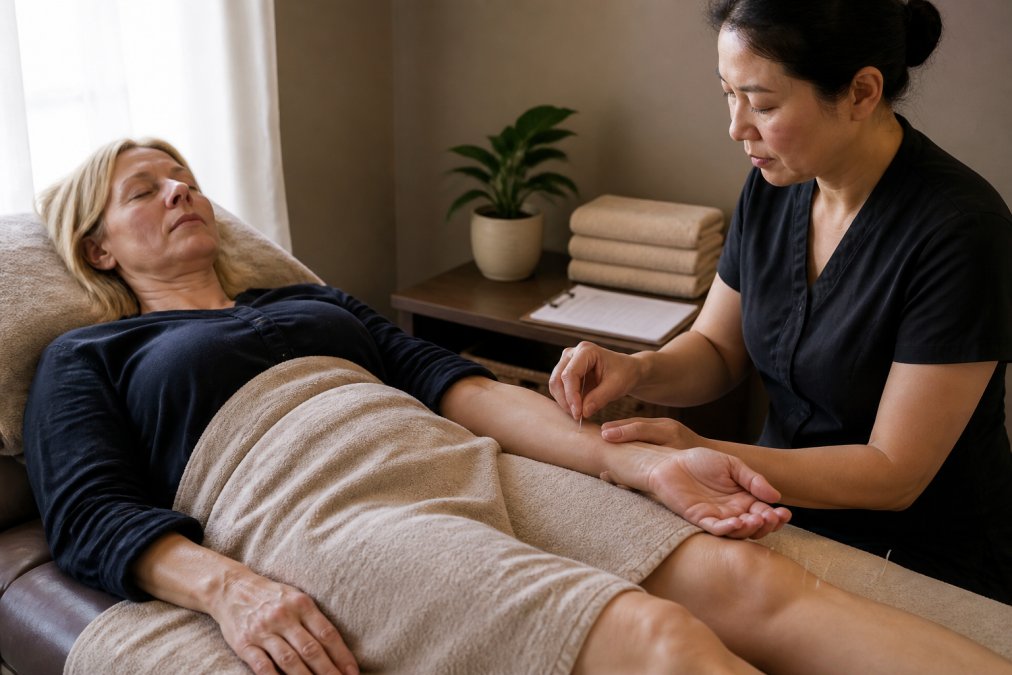
The practitioner will ask about your medical history, menopause symptoms, sleep, stress levels and any medication you take, including HRT. They may feel your pulse and look at your tongue, both are standard TCM diagnostic methods. Then they place fine needles at selected points. You rest for around 20 to 30 minutes. Most people feel relaxed rather than sore. Some notice a mild aching or tingling sensation when the needle is inserted, which usually fades within seconds.
How to Judge Whether It Is Working
Because hot flushes vary naturally from day to day, memory alone is unreliable. A simple diary, noting time, severity and any triggers, gives you real data. If there is no meaningful change after a fair trial, it is reasonable to stop.
The Cost-Benefit Question
If you are paying privately, ask your practitioner about their policy on pausing or stopping treatment. Some women choose to continue with monthly maintenance sessions; others stop entirely once symptoms settle. There is no single right answer.
Acupuncture for Menopause Symptoms Beyond Hot Flushes
Hot flushes are only part of the picture. Acupuncture for menopause symptoms often addresses sleep disturbances, mood swings, anxiety and somatic symptoms such as aching joints.
Many women say the sleep improvement matters as much as the flush reduction. Better rest supports mood, energy and focus.
Other symptoms that may respond include:
- Night sweats that wake you repeatedly
- Low mood and irritability
- Headaches and tension
- Reduced energy and concentration
Lifestyle Changes for Menopause Hot Flushes That Support Treatment
Lifestyle changes for menopause hot flushes work best alongside treatment, not instead of it. Small, consistent adjustments often make a visible difference.
The Trigger Audit
Rather than cutting out everything at once, try a two-week trigger audit. Keep your flush diary and note what you ate, drank or did in the hour before each flush. Common culprits include alcohol, caffeine, spicy food and sudden temperature changes. After two weeks, patterns often emerge. You may find that one glass of wine in the evening reliably triggers a night sweat, while coffee at lunchtime has no effect. This targeted approach is more sustainable than blanket avoidance.
Practical Adjustments That Help
- Dress in layers so you can cool down fast without getting chilled afterwards
- Keep your bedroom cool, around 16-18°C is often comfortable, and use breathable bedding such as cotton or bamboo
- Practise slow breathing when a flush starts: breathe in for four counts, hold for four, out for six. This can shorten the episode
- Stay active with regular, moderate exercise such as walking, swimming or yoga. Avoid intense workouts close to bedtime if they trigger night sweats
- Stay hydrated with cool water throughout the day, especially during and after a flush
Self-Acupressure for Immediate Relief Between Sessions
Self-acupressure lets you support your treatment between visits. Press firmly on a point for one to two minutes, breathing slowly, and repeat on both sides. Useful points to try:
- Large Intestine 4: in the web between thumb and index finger
- Spleen 6: about four finger-widths above the inner ankle
- Kidney 1: on the sole of the foot, in the soft dip near the ball
When to Speak to Your GP
If your symptoms are severe, disrupting sleep most nights, or affecting your mood and daily life, speak to your GP. They can review your overall care, including whether HRT or other prescribed options are right for you. Acupuncture can sit alongside those treatments, but it should not delay a proper medical assessment.
Safety, Side Effects and Combining Acupuncture With HRT
Acupuncture is generally considered safe when carried out by a trained, insured practitioner using sterile, single-use needles. Side effects are usually mild: small bruises, slight soreness or brief tiredness after a session.
Self-Acupressure Techniques and What a Session Involves
Self-acupressure lets you support your treatment between visits. Press firmly on a point for one to two minutes, breathing slowly, and repeat on both sides.
Useful points to try:
- Large Intestine 4: in the web between thumb and index finger
- Spleen 6: about four finger-widths above the inner ankle
- Kidney 1: on the sole of the foot, in the soft dip near the ball
Frequently Asked Questions
Does acupuncture really work for hot flushes?
Research into acupuncture for menopause hot flushes shows mixed but generally encouraging results. Several randomised controlled trials and systematic reviews report reductions in the frequency and severity of vasomotor symptoms, though some of this benefit overlaps with the placebo effect seen in sham acupuncture groups. What matters most is that many women report fewer night sweats and better sleep after a course of treatment. A qualified practitioner can assess your symptoms and discuss realistic expectations before you begin.
How many acupuncture sessions are typically needed for menopause symptoms?
The right number of sessions depends on how severe your vasomotor symptoms are, how long you have had them and whether you are also using HRT or other treatments. Your practitioner should agree a review point with you rather than commit you to an open-ended plan.
Are there specific pressure points for relieving hot flushes?
In traditional Chinese medicine, points such as Large Intestine 4 (Hegu), Spleen 6 (Sanyinjiao) and Kidney 3 (Taixi) are commonly used for menopause-related symptoms. Self-acupressure involves pressing these points with a thumb for around one to two minutes, once or twice daily. It is a gentle add-on, not a replacement for treatment. Ask your practitioner to show you the correct locations, because pressing the wrong spot or pressing too hard can cause bruising.
How does acupuncture integrate with other menopause management strategies?
Acupuncture can sit alongside HRT, lifestyle changes and GP-led care rather than replacing them. Many women use it to manage hot flushes, night sweats and sleep disturbances while continuing prescribed treatment. Always tell your practitioner about any medication, including HRT, and tell your GP you are having acupuncture. If symptoms are severe or you have a history of hormone-sensitive conditions, get medical advice first. A holistic approach works best when your practitioners communicate.
Hot flushes can feel like they are running your life, and the search for relief is often frustrating. If you want a holistic approach that treats the whole person, Lee Chinese Style Therapy Ltd offers acupuncture, acupressure and Tui Na massage tailored to your symptoms. Book a consultation with Lee Chinese Style Therapy Ltd and take the first step toward calmer days and better sleep.