 ultimate-guide
Benefits of Chinese Cupping Therapy for Health
Table of Contents
- How Chinese Cupping Therapy Works
- The Main Health Benefits of Chinese Cupping Therapy
- What Conditions Does Cupping Treat?
- How Long Do Cupping Marks Last?
- Cupping Therapy Aftercare Advice
- Side Effects, Contraindications and Finding a Qualified Practitioner
- Frequently Asked Questions
Last Updated: September 16, 2026
How Chinese Cupping Therapy Works
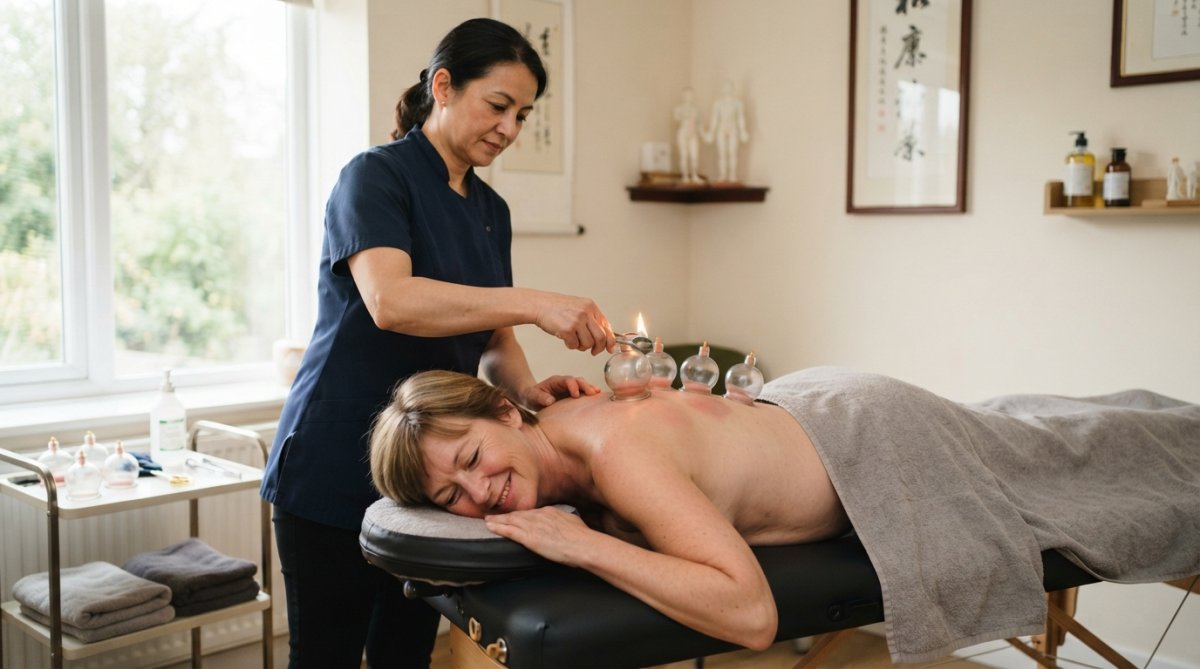
Chinese cupping therapy is a traditional treatment in which heated or suction cups are placed on the skin to create a vacuum, drawing tissue upward and stimulating circulation beneath the surface. At Lee Chinese Style Therapy Ltd, we explain it as a way of encouraging blood flow and releasing tension in areas that have become stuck, tight or painful. The suction is the mechanism; the effect is felt in the muscles, fascia and surrounding tissue. (Source: NHS guidance on back pain)
The Traditional Chinese Medicine Perspective
In traditional Chinese medicine, cupping is understood to move Qi and blood through the meridians, the channels that practitioners use to map how energy and circulation travel around the body. Where those channels are congested, pain and stiffness tend to follow. Cupping is therefore used alongside acupuncture, Tui Na massage and Gua Sha to restore movement rather than simply mask a symptom. It is one part of a wider assessment, not a standalone fix.
What Modern Research Suggests
Modern explanations focus on the mechanical effect of suction on local tissue. The vacuum lifts the skin and underlying fascia, which increases blood flow to the area and may reduce tension in the muscle beneath. Many practitioners find that this mechanical stimulation helps explain why clients report relief after treatment, particularly in areas of long-standing tightness. The evidence base is still developing, and it is reasonable to describe cupping as a supportive therapy rather than a proven cure for any single condition.
The Main Health Benefits of Chinese Cupping Therapy
The main benefits of Chinese cupping therapy for health centre on pain relief, recovery and general wellbeing. Clients commonly report reduced stiffness, easier movement and a sense of release after a course of treatment. The benefits tend to build across sessions rather than appearing after a single appointment, which is why a proper assessment and a realistic plan matter more than a one-off booking.
Pain Relief for Chronic Musculoskeletal Conditions
Chronic musculoskeletal pain is the most common reason people seek cupping. Where neck, shoulder or lower back tightness has persisted for months, cupping is often used to ease the surrounding tissue so that movement becomes less guarded. A common mistake is expecting one session to undo years of tension. In practice, cupping works best as part of a course, combined with hands-on techniques such as Tui Na massage and a stretching routine at home.
Recovery Support for Athletes and Active People
For athletes and active people, cupping is used to support recovery between training sessions. The suction encourages blood flow to tired muscle groups, which many find helps them feel looser and more ready to train. It is not a substitute for proper rehabilitation of an injury, and anyone with a suspected structural problem should be assessed before returning to sport. Used sensibly, it complements a structured recovery plan rather than replacing it.
Support During Menopause and Hormonal Change
Menopausal symptoms such as hot flushes, disturbed sleep and mood swings are frequently described as difficult to manage, and many people look for additional support alongside their GP's advice. Cupping is used in traditional Chinese medicine as part of a broader approach to balance and relaxation, and clients often report feeling calmer and sleeping better during a course of treatment. It is a supportive therapy, not a replacement for medical care, and any significant symptom change should be discussed with a doctor.
What Conditions Does Cupping Treat?
Cupping is most often used for musculoskeletal pain, including neck, shoulder and back stiffness, as well as general tension and fatigue. It is also used to support recovery after exercise and, in some cases, to help with stress-related complaints. Cupping is not a treatment for every condition, and a qualified practitioner will tell you honestly whether it is likely to help your particular problem or whether another approach would serve you better.
How Long Do Cupping Marks Last?
Cupping marks typically fade within three to ten days, depending on the intensity of the treatment and how your skin responds. The marks are caused by the suction drawing blood to the surface and are not bruises in the usual sense. They may look darker immediately after treatment and lighten gradually. If marks persist beyond two weeks or feel painful rather than simply tender, mention it to your practitioner.
Cupping Therapy Aftercare Advice
Cupping therapy aftercare advice is simple but worth following closely: keep the treated area warm, avoid strenuous activity for the rest of the day, and drink plenty of water. Many practitioners recommend avoiding cold draughts and hot baths immediately after treatment. Gentle movement is fine, but give the tissue time to settle. If you feel light-headed afterwards, rest for a few minutes before driving or travelling home.
- Keep the treated area covered and warm for the rest of the day
- Drink water regularly to stay hydrated
- Avoid heavy training or strenuous exercise for 24 hours
- Skip hot baths, saunas and cold exposure immediately after treatment
- Note any changes in symptoms to discuss at your next session
Side Effects, Contraindications and Finding a Qualified Practitioner
Cupping is generally well tolerated, but it is not suitable for everyone. Common side effects include temporary marks, mild tenderness and, occasionally, light-headedness. Cupping should be avoided over broken skin, areas of active infection, and on anyone with a bleeding disorder or taking blood-thinning medication without medical clearance. It is also not appropriate during certain stages of pregnancy. Always disclose your full medical history, medications and any recent surgery before treatment begins.
Finding a qualified practitioner matters more than finding the nearest appointment. Ask about training, professional membership and insurance, and expect a proper consultation before any treatment. A reputable practitioner will assess your condition, explain what cupping can and cannot do, and refer you on if your symptoms suggest something that needs medical investigation. At Lee Chinese Style Therapy Ltd, our approach combines traditional techniques with a clear, honest assessment of what is likely to help.
Chronic pain and stubborn tension rarely resolve on their own, and guessing at treatment wastes both time and money. If you are looking for a practitioner who will assess your condition properly and explain the reasoning behind every step, Lee Chinese Style Therapy Ltd offers Chinese medical cupping alongside acupuncture, Tui Na massage and Gua Sha, tailored to complex and long-standing conditions. Get started with Lee Chinese Style Therapy Ltd and find out whether cupping is the right fit for you.
Frequently Asked Questions
What are the primary health benefits of Chinese cupping therapy?
Chinese cupping therapy is used to ease musculoskeletal pain, particularly in the back, neck and shoulders. It may also support recovery after exercise by increasing blood flow to tired muscles. Some people find it helpful for stress-related tension and for symptoms associated with hormonal changes such as menopause. The treatment is often used alongside acupuncture or Tui Na massage as part of a wider plan. Individual results vary, and cupping works best as part of a course of sessions tailored to your specific condition.
Is Chinese cupping therapy safe for chronic pain management?
Cupping is generally well tolerated when performed by a trained practitioner. Common after-effects include temporary circular marks and mild soreness, which usually settle within a few days. It is not suitable for everyone: people with certain skin conditions, bleeding disorders or those taking blood-thinning medication should check with their GP first. Always disclose your full medical history during your consultation so the practitioner can assess whether cupping is appropriate for you.
How long do cupping marks last?
Cupping marks typically fade within three to ten days, depending on the intensity of the treatment and your individual skin type. Lighter marks may disappear in two to three days, while darker or more stubborn marks can take up to two weeks. Keeping the area clean, avoiding direct sun exposure and staying hydrated can help them clear more quickly. If marks persist beyond two weeks or cause concern, speak to your practitioner or GP.
What aftercare should I follow after a cupping session?
After cupping, drink plenty of water and avoid alcohol for the rest of the day. Keep the treated area covered and avoid cold draughts, as the pores remain open. Skip intense exercise, saunas and hot baths for at least 24 hours. Gentle stretching and rest are fine. If you notice any unusual swelling, blistering or pain, contact your practitioner promptly. Following these steps supports comfort and helps you get the most from your treatment.