 comparison
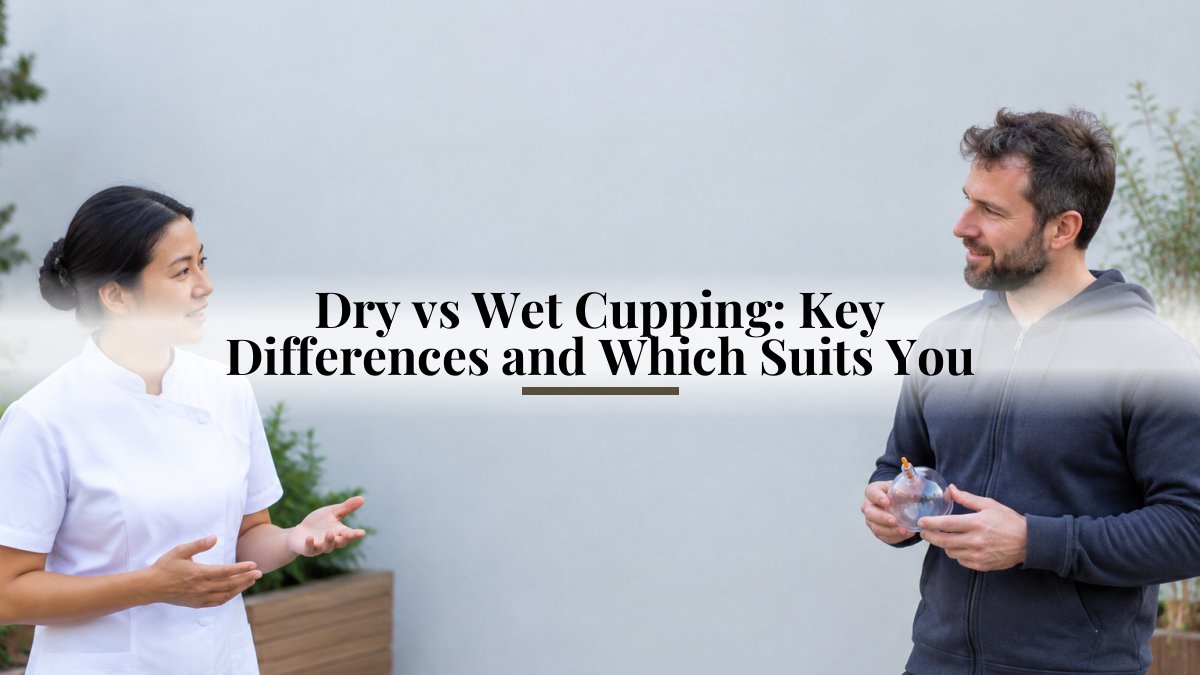
Dry vs Wet Cupping: Key Differences and Which Suits You
Last Updated: November 5, 2026
Quick Summary
Dry vs wet cupping differ in one fundamental way: dry cupping uses suction alone, while wet cupping adds superficial incisions and the removal of a small amount of blood. Dry cupping carries a low infection risk because the skin stays intact, whereas wet cupping breaches the skin barrier and requires strict aseptic technique in a clinical setting.
- Dry cupping sessions typically last 10-15 minutes, while wet cupping sessions run 15-20 minutes.
- Wet cupping, known as hijama, uses sterile single-use lancets to make tiny punctures before reapplying suction.
- Wet cupping typically uses lower suction than dry cupping to avoid excessive bleeding.
- Avoid hot baths, saunas and swimming for at least 24 hours after cupping.
- Wet cupping is unsuitable for people with weakened immune systems or poorly controlled diabetes.
Table of Contents
- Dry vs Wet Cupping: The Core Differences at a Glance
- How Each Technique Works: Suction, Incisions and Skin Response
- Benefits of Cupping Therapy for Muscle Pain and Recovery
- Hygiene and Sterilisation: What to Expect in a Clinical Setting
- How Long Do Cupping Marks Last?
- Cupping Therapy Aftercare Advice for a Smooth Recovery
- Contraindications and Who Should Avoid Cupping
- Book a Consultation to Decide if Dry or Wet Cupping Is Right for You
- Frequently Asked Questions
Dry vs Wet Cupping: The Core Differences at a Glance
Dry vs wet cupping differ in one fundamental way: dry cupping uses suction alone, while wet cupping adds superficial incisions and the removal of a small amount of blood. Both are forms of cupping therapy, a practice within traditional Chinese medicine, but they suit different people and carry different levels of risk. Choosing the right approach for your situation matters, which is why it is worth discussing the distinction before treatment.
Dry cupping uses glass or silicone cups placed on the skin with suction applied, with no needles and no blood. Wet cupping, known in Arabic and Islamic tradition as hijama, goes a step further. The practitioner makes tiny punctures with a sterile lancet, then applies suction to draw a small quantity of blood.
Which one is right for you depends on your health, your goals and your tolerance for risk. Below, we break down how each technique works and the safety questions to consider.
| Feature | Dry Cupping | Wet Cupping (Hijama) |
|---|---|---|
| Skin broken | No | Yes, superficial incisions |
| Blood drawn | No | Yes, a small amount |
| Sensation | Pulling, tightness | Pulling plus brief pinprick |
| Typical session | 10-15 minutes | 15-20 minutes |
| Infection risk | Low | Higher, requires strict hygiene |
| Best for | Muscle tension, recovery | Traditional bloodletting protocols |
| Home use | Possible with care | No, practitioner only |
What Is Dry Cupping?
Dry cupping is a therapy in which a practitioner creates suction inside a cup placed on the skin, without breaking the skin at any point. The vacuum lifts the skin and underlying tissue, drawing blood towards the surface and creating a pulling sensation. Cups may be glass, plastic or medical-grade silicone, and suction comes from a pump or from squeezing the cup itself.
The treatment is often used for muscle tension and stiffness. Because the skin stays intact, dry cupping carries a low risk of infection.
What Is Wet Cupping (Hijama)?
Wet cupping is a traditional therapy that combines suction with controlled, superficial skin punctures to draw a small amount of blood. The practitioner first applies a cup to create suction, removes it, makes tiny incisions with a sterile single-use lancet, then reapplies suction so a small volume of blood is drawn into the cup.
Hijama has deep roots in traditional medicine. Because the skin barrier is broken, hygiene and practitioner skill are critical, and wet cupping should be performed in a clinical setting with proper sterilisation.
How Each Technique Works: Suction, Incisions and Skin Response
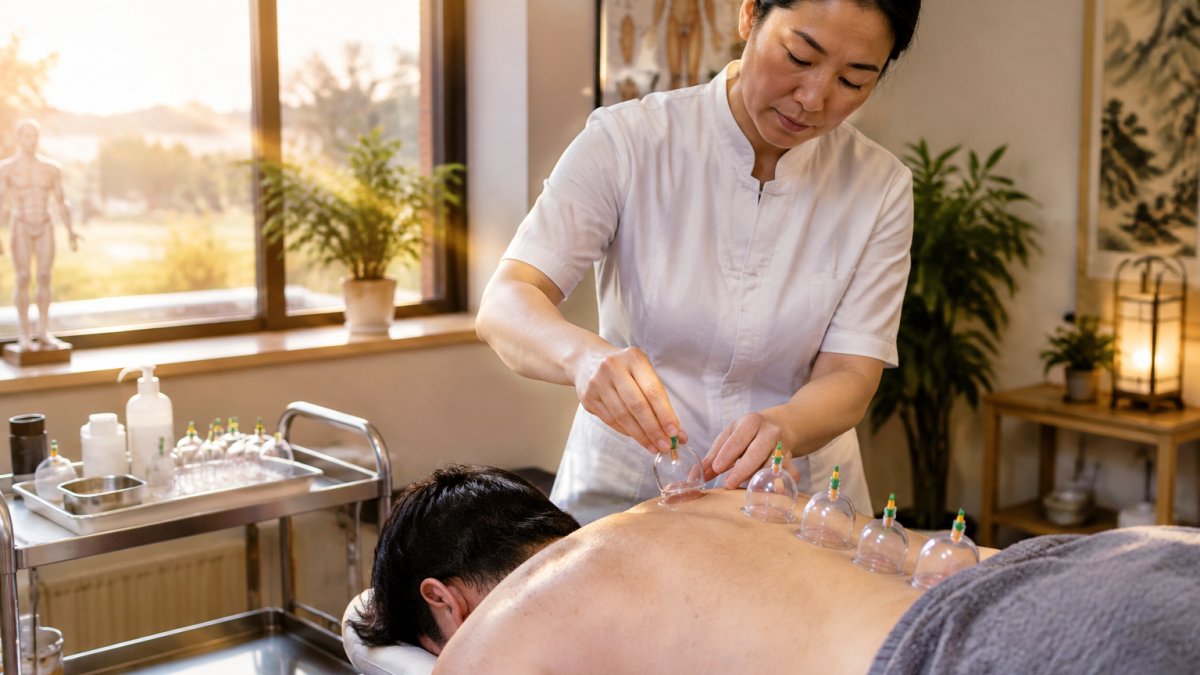
Both techniques begin the same way: a cup is placed on the skin and suction is applied, creating a local vacuum. That vacuum pulls skin and tissue upward, decompressing the layers beneath and encouraging local circulation. The difference is what happens next.
In dry cupping, the suction is the whole treatment. The cups may stay still or be moved gently across oiled skin, a technique sometimes called cupping massage. The skin responds by drawing blood to the area, and the familiar round marks appear where the suction was strongest. The suction draws the skin and tissue upward, which can encourage local circulation.
Wet cupping adds a step. After initial suction, the practitioner removes the cup and makes superficial incisions, then reapplies suction to draw a small amount of blood. The incisions are made with a sterile single-use lancet. The body's response involves circulatory changes alongside the removal of a small volume of blood. The skin puncture is minor, but it changes the aftercare requirements entirely.
A key difference lies in the skin's barrier function. Dry cupping leaves the stratum corneum intact, so the risk of introducing pathogens is minimal. Wet cupping breaches that barrier, meaning the practitioner must follow strict aseptic technique: gloves, sterile drapes, single-use lancets and proper sharps disposal. The depth of suction also differs, wet cupping typically uses lower suction to avoid excessive bleeding, while dry cupping can use stronger vacuum for deeper tissue effects.
Watch out: if a practitioner proposes wet cupping without visibly opening sterile packaging in front of you, or reuses a lancet even once, the infection risk rises sharply. Dry cupping carries no such bloodborne risk, but cups should still be cleaned between patients.
Benefits of Cupping Therapy for Muscle Pain and Recovery
Cupping is often used to help with muscle tension. Suction lifts tissue, which may ease the feeling of tightness in the treated area.
For recovery, cupping is often used alongside other bodywork. Cupping can be combined with other treatments, such as Tui Na massage or acupuncture. If you want a broader look at the health benefits of Chinese cupping therapy, we cover them in more depth elsewhere. For readers specifically dealing with knots, our guide to cupping therapy for muscle knots walks through a safe approach.
Cupping is often one part of a wider approach that may include movement and other therapies.
Hygiene and Sterilisation: What to Expect in a Clinical Setting
Hygiene is where dry and wet cupping part company most sharply. Because wet cupping breaks the skin, it carries a genuine infection risk if equipment is reused or handled carelessly. Wet cupping should be performed using sterile, single-use lancets, with the skin cleaned before and after and sharps disposed of safely.
Watch out: wet cupping performed with shared or inadequately sterilised equipment can transmit bloodborne infections. If a practitioner cannot tell you how their lancets are sterilised and disposed of, walk away.
Dry cupping is lower risk because the skin stays intact, but cups should still be cleaned between patients. In a clinical setting, expect fresh linen, cleaned cups and a practitioner who explains every step. If you are considering the related clinical therapy of Chinese bloodletting, our Chinese bloodletting specialist therapy page explains the protocols, suitability and precautions involved.
How Long Do Cupping Marks Last?
Cupping marks usually fade over several days, depending on the intensity of suction, your skin type and how quickly you heal. The marks are not bruises in the usual sense. They are caused by blood drawn to the surface under suction, and they range from light pink to deep purple.
Darker, longer-lasting marks usually mean stronger suction or slower local circulation, not that "more toxins" were removed. That claim circulates widely and does not hold up. The colour reflects capillary response and how firmly the cup was applied.
Wet cupping leaves the same round marks plus small scab points where the incisions were made. These heal quickly but should be kept clean.
Cupping Therapy Aftercare Advice for a Smooth Recovery
Good aftercare helps you feel comfortable while the skin settles. The core principle is simple: protect the treated area, keep it clean and give your body time to respond.
- Keep the treated area covered and warm for the first few hours.
- Avoid hot baths, saunas and swimming for at least 24 hours.
- Drink water and rest; light movement is fine, intense training is not.
- Do not scrub or exfoliate the marks.
- For wet cupping, keep the incision points clean and dry, and watch for redness, swelling or warmth that worsens.
- Avoid alcohol and heavy meals immediately after treatment.
If you have had wet cupping, treat the small puncture sites like any minor wound. If you notice spreading redness, increasing pain or a fever, seek medical advice promptly. Dry cupping rarely causes anything beyond temporary tenderness.
Contraindications and Who Should Avoid Cupping
Cupping is not suitable for everyone, so it is important to discuss your health history with your practitioner first. The contraindications can differ between the two techniques.
Absolute contraindications for both techniques:
- Bleeding disorders such as haemophilia or von Willebrand disease (Bleeding disorders - Overview). The suction alone can cause capillary rupture, and in wet cupping the incisions add a direct bleeding risk.
- Anticoagulant therapy, including warfarin, heparin, apixaban, rivaroxaban or clopidogrel. Even dry cupping can cause significant bruising or haematoma in patients on these medications; wet cupping is unsafe because the incisions may not clot promptly.
- Pregnancy, particularly on the abdomen and lower back. The suction can stimulate uterine contractions in theory, and the area is vulnerable.
- Broken, inflamed or infected skin in the treatment area, including eczema, psoriasis flares, sunburn or open wounds.
- Active fever or systemic infection, as cupping may worsen the condition or spread infection.
- Severe circulatory problems such as advanced peripheral arterial disease or a history of deep vein thrombosis, where altered blood flow could be harmful.
Additional contraindications specific to wet cupping:
- Weakened immune system, from chemotherapy, immunosuppressant drugs, HIV or recent organ transplant. A breached skin barrier in an immunocompromised patient creates a genuine infection risk.
- Low platelet count (thrombocytopenia) or low white blood cell count, because wound healing and infection control are compromised.
- Poorly controlled diabetes, as delayed wound healing and higher infection risk make any skin puncture inadvisable.
- Known bleeding disorders or a family history of clotting problems, even if you are not on medication, a practitioner should be told.
Patients on blood thinners should tell their practitioner about all medications before any cupping, as suction can still cause bleeding under the skin. If you are unsure, a consultation is a sensible first step.
Book a Consultation to Decide if Dry or Wet Cupping Is Right for You
Choosing between dry and wet cupping is not a decision to make from a web page alone. Your health history, your goals and the area being treated all shape which technique is appropriate, and sometimes the answer is neither or a combination with other therapies.
A consultation allows your situation to be assessed before any treatment is recommended. You can book a consultation to discuss your needs, or review the full range of Chinese medicine treatments we offer, including acupuncture, Tui Na and Gua Sha, to see how cupping might fit into a wider plan.
Frequently Asked Questions
Is wet cupping more effective than dry cupping?
There is no single answer because the two techniques suit different needs. Wet cupping involves superficial incisions and suction to draw a small amount of blood. Dry cupping uses suction alone and is often chosen for muscle tension. A qualified practitioner can assess your health history and recommend which approach fits your goals.
Does wet cupping leave permanent marks?
Wet cupping can leave circular marks and minor scabbing where the skin was punctured, but these are not permanent. Marks usually fade over several days to a few weeks, depending on skin type and aftercare. Following cupping therapy aftercare advice, such as keeping the area clean and avoiding scratching, helps the skin heal well.
Is cupping therapy regulated in the UK?
Standards can vary between practitioners, so look for a clinician with formal training in traditional Chinese medicine and clear hygiene protocols. For wet cupping, sterile, single-use equipment should be used, and contraindications should be explained before treatment. Asking about credentials and sterilisation practices is a reasonable step before booking.
How should I prepare for a cupping session?
Arrive hydrated and avoid heavy meals or alcohol beforehand. Wear loose clothing that allows access to the treatment area, and tell your practitioner about any medication, skin conditions or recent surgery. For wet cupping, confirm that sterile single-use lancets will be used. Afterwards, follow cupping therapy aftercare advice: keep marks clean, avoid intense exercise for a day and monitor how long cupping marks last so you can report anything unusual.