 how-to
Cupping Therapy for Muscle Knots: A Safe How-To Guide
Table of Contents
- How Cupping Therapy Works for Muscle Knots
- Can Cupping Release Muscle Tension?
- A Step-by-Step Guide to Cupping for Muscle Knots
- Cupping Therapy Aftercare: What to Do After a Session
- How Long Do Cupping Marks Last?
- Cupping vs Massage for Muscle Knots
- Realistic Expectations and Evidence Quality
- Frequently Asked Questions
Last Updated: October 20, 2026
How Cupping Therapy Works for Muscle Knots
Cupping therapy for muscle knots uses suction to lift skin and soft tissue away from the muscle beneath. A therapist places cups on the skin and creates negative pressure, either by heat or a pump. That pull draws blood to the area and, in theory, helps tight tissue release.
At Lee Chinese Style Therapy Ltd, we use Chinese medical cupping as part of a wider TCM approach to stubborn muscular pain. The aim is simple: ease tightness, support blood flow, and help you move more freely.
A muscle knot, often called a trigger point, is a small, tender band of tight muscle that hurts when pressed and can refer pain elsewhere. Cupping targets the tissue around and over that knot.
Suction, Negative Pressure, and Tissue Response
The cup creates negative pressure. Instead of pressing down like a massage, it pulls up. This lifts the layers of skin, fascia, and muscle.
That lift does a few things:
- It increases blood flow to the area.
- It may help separate stuck layers of fascia.
- It can calm the local pain response.
The pull is gentle. Too much suction causes soreness, so a trained therapist adjusts it to your comfort.
Dry Cupping vs Myofascial Cupping
Dry cupping uses static cups left in place for several minutes. It suits broad areas of tightness.
Myofascial cupping moves the cup slowly across the skin after applying oil. This gliding action targets adhesions and tissue mobility. We often combine both in one session, depending on where the knot sits.
Can Cupping Release Muscle Tension?
Yes, cupping can help release muscle tension for many people. The suction lifts tight tissue and boosts local circulation, which may ease the feeling of a locked-up muscle. Many people report a looser, warmer area afterwards.
But it is not a cure on its own. A knot often has a cause: posture, overuse, or stress. Cupping eases the symptom while you address the root.
The honest answer is that results vary. Some people feel clear relief after one session. Others need a short course alongside stretching and movement work.
A Step-by-Step Guide to Cupping for Muscle Knots
Here is how a safe session works, from screening to finish. This is the practical part most guides skip.
- Screen for safety. Your therapist checks your health history and any reasons to avoid cupping. This includes medication, skin conditions, and previous reactions to similar treatments.
- Find the knot. They press the area to locate the tight band and note where pain refers. A trigger point often refers pain to a distant area, so the therapist maps the pattern before placing cups.
- Apply oil. A thin layer lets cups glide and protects the skin. Too much oil reduces suction; too little increases drag.
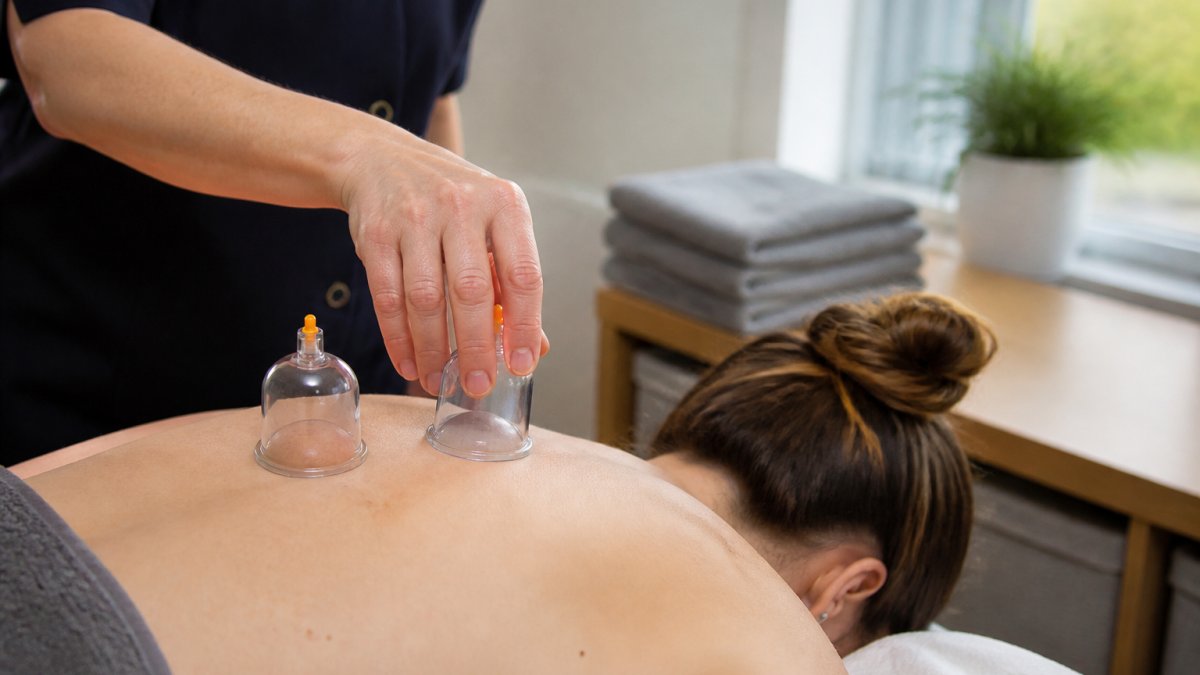
- Place the cups. Suction is set to a comfortable level, never sharp or pinching. A common starting point is a light pull that lifts the skin by a few millimetres. The therapist may use smaller cups for precise work around the knot and larger cups for broader areas.
- Leave or glide. Static cups rest for a few minutes; moving cups glide over the tissue. For a knot, the therapist might start with a static cup for two to three minutes, then switch to a slow glide across the tight band for another two to three minutes. Gliding speed is typically slow enough that the skin does not redden too quickly.
- Check in. Your therapist asks about comfort and adjusts the pull. If you feel sharp pain, numbness, or dizziness, tell them immediately. The cup should never feel like it is pinching or burning.
- Remove and review. Cups come off, the skin is cleaned, and aftercare is explained. The therapist notes how the tissue responded and adjusts the next session accordingly.
Safety Screening and Contraindications
Cupping is generally low risk, but it is not for everyone. Tell your therapist if you:
- Take blood-thinning medication.
- Have a bleeding disorder.
- Are pregnant.
- Have broken, inflamed, or infected skin in the area.
- Have a history of blood clots or circulation problems.
- Have reduced sensation in the area, as you may not feel excessive suction.
- Have a skin condition such as eczema or psoriasis in the treatment area.
If any of these apply, your therapist may adjust the plan or suggest a different treatment. Never book cupping for a knot without this conversation first.
Practical Treatment Parameters
A typical session lasts around 10 to 20 minutes of cupping within a longer appointment. Suction stays light to moderate. Stronger is not better; comfort is the guide. A common pattern is to use static cups for two to five minutes per area, or moving cups for one to two minutes per zone before checking the skin.
Frequency matters too. Many people have one session a week for a short course of three to four sessions, then space visits out as things improve. Your therapist sets the plan based on how you respond. If a knot does not change after two or three sessions, the therapist should reassess whether cupping is the right approach.
Stop the session if you feel dizzy, nauseous, or if the skin develops a sharp burning sensation. These are uncommon but are reasons to pause.
Cupping Therapy Aftercare: What to Do After a Session
Aftercare is where a lot of people go wrong. The treatment starts the process; what you do next protects it.
Keep the area warm and avoid cold drafts. Drink water. Skip intense training on the treated area for a day. Gentle movement and light stretching help, but do not hammer the muscle.
Mild soreness is normal. It usually settles within a day or two. If pain gets worse or the skin looks infected, contact your therapist or a GP.
How Long Do Cupping Marks Last?
Cupping marks usually fade within 3 to 10 days. They range from light pink to deep purple, depending on suction strength and how your skin responds. The marks are not bruises in the usual sense, and they are not a sign of how "toxic" your body is.
Darker marks often appear where tissue was tightest, but the colour is not a reliable measure of results. Most people find marks fade faster with good hydration and gentle movement.
Cupping vs Massage for Muscle Knots
Both cupping and massage ease muscle knots, but they work differently. Massage presses and kneads the tissue. Cupping lifts and pulls it.
| Feature | Cupping | Massage |
|---|---|---|
| Direction of force | Pulls up (suction) | Presses down |
| Best for | Broad tightness, fascia | Deep knots, relaxation |
| Marks left | Yes, temporary | Rarely |
| Sensation | Warm pull | Firm pressure |
Many people get the best result from combining them. We often pair cupping with Tui Na massage to release a knot from both directions.
Realistic Expectations and Evidence Quality
Be wary of anyone promising a cure. The evidence for cupping is mixed (pubmed.ncbi.nlm.nih.gov). Some studies suggest it can reduce pain and improve mobility, but the research is not strong enough to call it proven. Many studies are small, lack sham controls, or combine cupping with other treatments, making it hard to isolate the effect of suction alone.
That does not make it useless. Many people get real relief, and the risk is low when a trained therapist screens you first. The honest position is that cupping may help, especially as part of a wider plan. Proposed mechanisms include increased local blood flow, reduced tissue stiffness, and modulation of pain signalling. However, increased blood flow does not prove that a knot has been released. A knot is a clinical finding, not a measurable object, so changes in pain and movement are the practical outcomes to track.
A useful way to judge claims is to ask three questions: Was the study controlled? Were participants blinded? Was cupping the only treatment? If the answer to any is no, treat the result as promising but not definitive. Most practitioners find that cupping works best as an adjunct to movement, posture correction, and load management, not as a standalone fix.
Frequently Asked Questions
Is cupping therapy safe for everyone?
No. Cupping therapy is not suitable for everyone. It should be avoided over broken skin, open wounds, or areas with active infection, and it is not recommended if you take anticoagulant medication, have a bleeding disorder, or are pregnant without clinical clearance. People with uncontrolled high blood pressure or a history of blood clots should speak to a qualified practitioner first. A proper consultation and safety screening before treatment is essential, and your therapist should review your medical history and any medications before applying suction.
Do and don'ts after cupping?
After cupping, keep the treated area clean and dry, and avoid hot baths, saunas, and intense exercise for at least 24 hours. Do not scratch or pick at any marks, and avoid applying strong creams or oils to the area. Drink water and rest if you feel lightheaded. Do not expose the area to direct sun or cold drafts immediately afterwards. If you notice increasing pain, blistering, or signs of infection, contact your practitioner or seek medical advice promptly.
How long do cupping marks last?
Cupping marks typically fade within 3 to 10 days, depending on the intensity of suction, your skin type, and how quickly you heal. Lighter pink marks may disappear in a few days, while darker purple marks can take up to two weeks. They are not usually painful and are not the same as a bruise from impact. If marks remain beyond two weeks or are accompanied by swelling or pain, speak to your practitioner.
Can cupping help release muscle tension?
Cupping may help release muscle tension by using suction to lift and stretch soft tissue, which can improve local blood flow and reduce pressure pain. Some people report feeling looser and more mobile after a session. However, evidence quality varies, and cupping works best as part of a broader plan that includes movement, manual therapy such as Tui Na, and lifestyle adjustments. Results differ between individuals, so a consultation with a qualified practitioner will help set realistic expectations.
Muscle knots that will not shift can wear you down. At Lee Chinese Style Therapy Ltd, we combine Chinese medical cupping with Tui Na massage, Gua Sha, and acupuncture to treat the whole picture, not just the sore spot. Our practitioners screen every client for safety and tailor each session to how you respond. Book a consultation and take the first step toward lasting relief.