 comparison
Acupuncture vs Tui Na for Pain Relief: A 2026 Guide
Table of Contents
- Acupuncture vs Tui Na for Pain Relief: The Short Answer
- Acupuncture for Pain Relief: How Needles Change the Picture
- Tui Na Massage for Pain: Hands-On Relief for Muscles and Joints
- What to Expect from Acupuncture: Your First Appointment
- Which Type of Pain Responds Best to Which Treatment
- Acupuncture and Tui Na Together: A Combined Approach
- Pros, Cons and Safety: An Honest Look
- Frequently Asked Questions
Last Updated: October 17, 2026
Acupuncture vs Tui Na for Pain Relief: The Short Answer
Acupuncture vs Tui Na is not a contest with a single winner. They are two branches of the same tradition, and the right choice depends on what kind of pain you have and how your body responds. At Lee Chinese Style Therapy Ltd, we offer both, and we routinely explain the difference to people who arrive with long-standing neck stiffness, a stubborn shoulder injury, or pain that has outlasted every other approach.
Here is the short version. Acupuncture uses fine needles to influence pain signalling and muscle tension at specific points. Tui Na is hands-on bodywork that works directly on soft tissue, joints and range of motion. A 2019 review comparing Tuina and acupuncture found both were superior to traction or Chinese herbs for lumbar disc herniation, with no significant difference in effectiveness between them in the comparison shown.
Below, we break down what each treatment does, what a first appointment looks like, and which pain types tend to respond to which.
Side-by-Side Comparison at a Glance
| Feature | Acupuncture | Tui Na |
|---|---|---|
| Method | Fine sterile needles at defined points | Hands-on pressing, rolling, kneading |
| Feels like | Brief pinch, then heaviness or warmth | Firm massage, sometimes deep pressure |
| Best suited to | Nerve-related pain, headaches, widespread pain | Muscular tension, joint stiffness, restricted movement |
| Session length | Typically 20-40 minutes with needles in place | Typically 30-45 minutes of active work |
| Clothing | Points often need to be exposed | Loose clothing, minimal undressing |
| After-effects | Possible mild soreness or drowsiness | Possible short-term tenderness |
Acupuncture for Pain Relief: How Needles Change the Picture
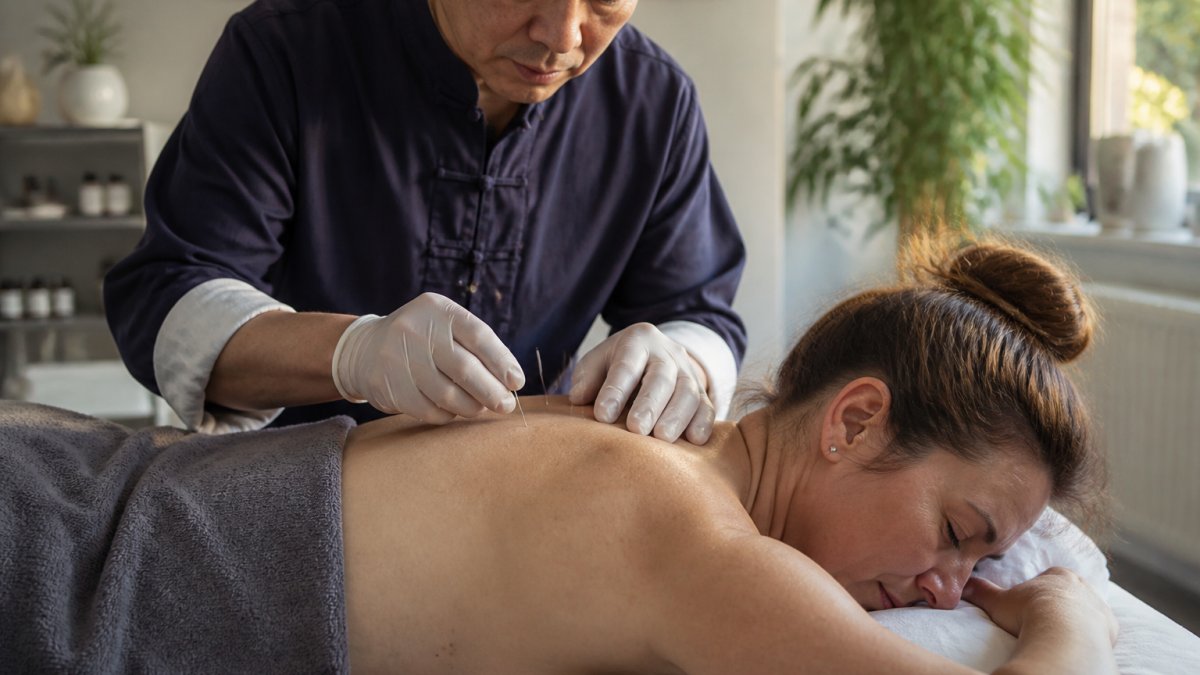
Acupuncture for pain relief works by inserting very fine sterile needles at specific points on the body. Practitioners select points based on where the pain sits, how it behaves, and what the underlying pattern appears to be.
The needles are nothing like injection needles. Most people describe a small pinch as the needle goes in, then a dull ache or warmth that fades within seconds. Sessions usually run 20 to 40 minutes with the needles in place, and many people drift off during treatment.
A common mistake is expecting one session to solve a problem that took years to build. Acupuncture tends to work cumulatively, and the response in the first two sessions tells us a great deal about how the course should be shaped.
Tui Na Massage for Pain: Hands-On Relief for Muscles and Joints
Tui Na massage for pain is manual therapy. The practitioner uses hands, fingers, thumbs, elbows and sometimes knees to press, roll, knead and stretch tissue, working through layers from surface muscles down to deeper structures.
Healthline's overview of Tuina massage describes a study in which six Tui Na treatments over three weeks reduced neck-pain intensity compared with no treatment. That is a useful marker of what a short course can do, though individual responses vary.
If your pain comes with stiffness, a joint that will not fully rotate, or muscles that feel like knotted rope, Tui Na usually addresses it more directly than needles alone. The trade-off is that it is active work: you will feel the practitioner's hands, and some techniques are firm.
What to Expect from Acupuncture: Your First Appointment
What to expect from acupuncture is simpler than most first-timers imagine. We start with a consultation covering your pain history, medical background and medications, then a brief physical assessment of movement and tender areas.
- Arrive having eaten something light in the previous two hours
- Wear loose clothing that allows sleeves and trouser legs to be rolled up
- Bring a list of medications, including blood thinners
- Tell us if you are pregnant, have a bleeding disorder, or use a pacemaker
- Allow extra time for your first visit, as the consultation is longer
- Plan a quiet evening afterwards rather than a heavy gym session
Needles typically stay in for 20 to 40 minutes. Most people feel relaxed afterwards; a few feel briefly lightheaded, which settles with a glass of water and a few minutes' rest. Mild bruising at a point is possible and harmless.
Which Type of Pain Responds Best to Which Treatment
There is no rule that assigns one treatment to one condition. In practice, the pattern of your pain matters more than its label. Sharp, shooting, burning or tingling pain often points towards acupuncture. Dull, heavy, stiff pain with restricted movement often points towards Tui Na. Many people need both.
Chronic Musculoskeletal Pain
Long-standing back, neck and shoulder pain usually involves both tissue tension and altered pain signalling. A combined plan, starting with Tui Na to release tissue and following with acupuncture to settle the system, is a common approach. The Endeavour College explanation of the difference between Tui Na and acupuncture is a helpful plain-language primer if you want to understand the distinction before your consultation.
Sports Injuries and Recovery
For athletes, Tui Na tends to lead. It works on muscle tone, scar tissue and joint range, which is what a returning shoulder or hamstring needs. Acupuncture supports recovery by addressing pain and guarding patterns that persist after the tissue has healed. In our experience, the combination is most useful in the later stages of rehabilitation, once acute swelling has settled.
Acupuncture and Tui Na Together: A Combined Approach
Acupuncture and Tui Na together are how traditional Chinese medicine is often practised in reality, not as separate silos. The two work on different layers: Tui Na changes the tissue mechanically, while acupuncture influences the nervous system's handling of pain.
A typical combined session might begin with 15 to 20 minutes of Tui Na to warm and release the area, followed by acupuncture needles for 20 minutes while you rest. The order can be reversed depending on what your body needs that day.
Pros, Cons and Safety: An Honest Look
Both treatments have real strengths and real limitations. Here is our honest assessment.
Acupuncture pros: well tolerated by most people, useful for pain that moves or radiates, and easy to combine with other care. Acupuncture cons: results build gradually, some people dislike needles, and mild bruising can occur.
Tui Na pros: immediate feedback on tissue quality, good for stiffness and restricted movement, and no needles involved. Tui Na cons: firm techniques can feel intense, short-term tenderness is common, and it is not suitable over acute injury, fractures, or infected skin.
On safety, both are low-risk when delivered by a trained practitioner. Acupuncture carries a small risk of bruising or faintness; Tui Na carries a risk of soreness if pressure is too strong. Neither should be used as a substitute for investigating new, severe, or unexplained pain. Speak to your GP about anything that is worsening, involves numbness or weakness, or came on after a fall.
At Lee Chinese Style Therapy Ltd, we hold a consultation before recommending either treatment, because the right answer for your shoulder is not necessarily the right answer for your back. If you are unsure which route suits you, book a consultation and we will assess your movement and pain pattern before suggesting a plan.
Frequently Asked Questions
What is the difference between acupuncture and Tui Na?
Acupuncture uses fine sterile needles inserted at specific points on the body, while Tui Na is a hands-on massage technique using pressing, rolling, kneading and stretching. Acupuncture tends to target specific points and is often chosen for nerve-related or widespread pain, while Tui Na works directly on muscles, joints and soft tissue. A 2019 review comparing the two for lumbar disc herniation found both were superior to traction or Chinese herbs, with no significant difference in effectiveness between them.
Is acupuncture or Tui Na better for pain relief?
Neither is universally better. The right choice depends on the type of pain, its location, how long you have had it, and your preferences. Acupuncture for pain relief is often used for chronic and nerve-related conditions, while Tui Na massage for pain suits muscular tension, joint stiffness and sports recovery. A 2019 research review found no significant effectiveness difference between the two for lumbar disc herniation. A consultation can help match the treatment to your specific situation.
What should I expect from acupuncture if I have never tried it?
Your first session usually involves a discussion of your pain history, medical background and goals, followed by needle placement at selected points. Needles are sterile and very fine, and most people feel little more than a brief tingle or ache. Sessions usually run 20 to 40 minutes with the needles in place. The number of sessions needed varies by individual and condition; this can be discussed during your consultation.
Can you have acupuncture and Tui Na together?
Yes. Many practitioners combine acupuncture and Tui Na together in a single treatment plan, using needles to target specific points and hands-on work to release surrounding muscles and joints. This combined approach can suit chronic musculoskeletal pain, sports injuries and recovery from strain. Whether it is appropriate for you depends on your condition and general health, so discuss it during a consultation rather than assuming both are suitable.
How do I choose between acupuncture and Tui Na in Hull?
Look for a practitioner who offers both treatments and can assess which suits your pain. Ask about qualifications, insurance and experience with your specific condition. Lee Chinese Style Therapy Ltd in Hull and Willerby offers acupuncture and Tui Na massage, so you can discuss both options in one consultation. Pricing depends on the treatment and course length, so please check our website or ask directly for current fees before booking.
Pain that has resisted physiotherapy, osteopathy and injections is exactly the kind we see most often. It rarely has one cause, and it rarely responds to one technique. Lee Chinese Style Therapy Ltd combines acupuncture, Tui Na massage and Chinese medical cupping in a single clinic, so your plan can change as your body responds rather than being fixed in advance. Book a consultation and we will assess what is actually driving your pain before recommending a course of treatment.