 blog
Can You Manage Perimenopause Symptoms Without Medication?
Last Updated: November 14, 2026
Quick Summary
You can manage perimenopause symptoms without medication using lifestyle changes, talking therapies, acupuncture and selected herbal remedies. Lifestyle measures such as exercise, diet, reduced alcohol and caffeine, weight and stress management form the foundation, while CBT has good evidence for flushes, night sweats, sleep and low mood. Non-hormonal approaches rarely eliminate symptoms but can reduce their frequency and intensity.
- Lifestyle measures rarely remove symptoms entirely but often reduce their frequency and intensity enough to matter.
- CBT-I is generally recommended as a first-line treatment for persistent insomnia and avoids dependency risk.
- Allow six to eight weeks before judging a herbal remedy, and keep a simple symptom diary.
- St John's wort reduces the effectiveness of combined hormonal contraceptives, warfarin and some antidepressants.
- Pick one or two approaches with reasonable evidence for your dominant symptom, not five at once.
Table of Contents
- Why More People Are Looking for Non-Hormonal Options
- Lifestyle Changes for Perimenopause: What the Evidence Supports
- Acupuncture for Perimenopause Symptoms: What to Expect
- Herbal Remedies for Perimenopause: Benefits, Risks and Interactions
- Tackling Sleep Problems During Perimenopause Without Medication
- Talking Therapies and Mind-Body Approaches for Mood and Anxiety
- Comparing Your Options: Evidence, Safety and Practicalities
- Booking a Consultation to Build Your Perimenopause Plan
- Frequently Asked Questions
Why More People Are Looking for Non-Hormonal Options
Many people exploring alternatives to medication for perimenopause symptoms are not against treatment. They want options that fit their body, their risk profile and their preferences.
People often arrive frustrated after being told there is "not much to be done", or wary of side effects, or simply curious about what else exists.
The honest answer is that several non-drug approaches have reasonable evidence behind them, and several do not.
Lifestyle Changes for Perimenopause: What the Evidence Supports
Lifestyle measures form the foundation of most non-hormonal plans, and they are the least risky place to start. They rarely remove symptoms entirely, but they often reduce their frequency and intensity enough to matter.
The mainstays are:
- Regular aerobic and resistance exercise for sleep, mood and weight management
- A balanced diet with adequate calcium and vitamin D for bone health
- Reducing alcohol and caffeine, both of which can trigger hot flushes and disrupt sleep
- Weight management, since body fat influences how oestrogen is processed
- Stress management, because stress amplifies flushes and mood changes
For a deeper look at practical daily steps, see our guide to 7 ways to balance hormones naturally for women over 40.
A common mistake is treating lifestyle change as an all-or-nothing overhaul.
Acupuncture for Perimenopause Symptoms: What to Expect
Acupuncture for perimenopause symptoms is one of the most researched complementary approaches, and the results are genuinely mixed. Some trials report reduced hot flush frequency and improved sleep quality; others show effects close to placebo.
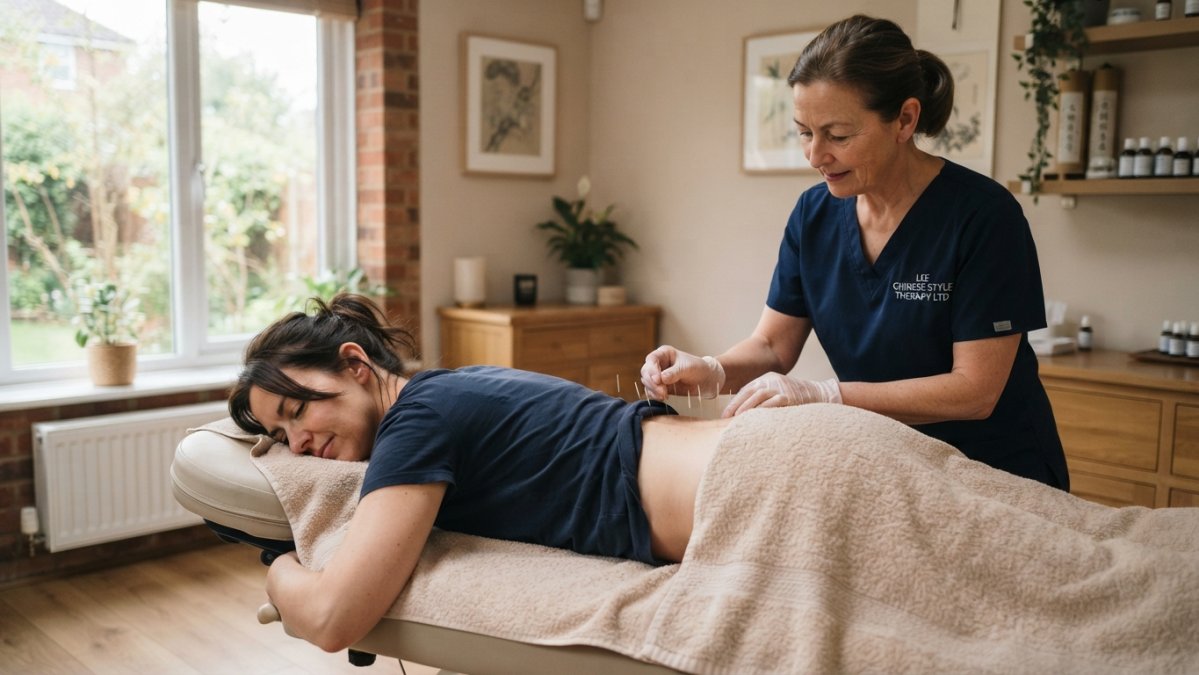
A typical course involves weekly sessions over several weeks, with a review to see whether you are responding.
For a focused look at flushing specifically, read our guide to acupuncture for menopause hot flushes, or start with the beginner's overview of acupuncture for menopause symptoms.
Herbal Remedies for Perimenopause: Benefits, Risks and Interactions
Herbal remedies are the most popular non-hormonal route people try first, and the most uneven in quality. In the UK, supplements are generally regulated as foods rather than licensed medicines, so a product on a shop shelf has not necessarily had to prove it works. That does not make them useless, it makes label-reading and disclosure to your GP essential.
What the evidence actually shows
| Remedy | What it is thought to do | Evidence quality | Key safety note |
|---|---|---|---|
| Black cohosh | Acts on serotonin pathways; not oestrogenic | Some support for flushes and night sweats | Rare liver concerns; stop and seek advice if you develop fatigue, dark urine or jaundice |
| Red clover isoflavones | Weak plant oestrogens (phytoestrogens) | Modest support for flushes | Avoid with a history of hormone-sensitive conditions |
| Soy isoflavones | Weak phytoestrogens | Modest support, strongest when taken consistently | Generally well tolerated in food amounts; supplement doses vary widely |
| Evening primrose oil | Gamma-linolenic acid; mechanism unclear | Weak evidence for flushes | May interact with blood thinners; not recommended in pregnancy |
| St John's wort | Increases serotonin availability | Evidence for low mood, not for flushes | Serious interactions with many medicines, see below |
| Sage | Traditionally used for sweating | Weak, largely traditional evidence | Avoid in epilepsy; may lower blood sugar |
A pattern worth knowing: the remedies with the best evidence for flushes are the isoflavones, and the effect is modest, typically a small reduction in frequency rather than elimination. The remedy with the best evidence overall, St John's wort, is for mood, not flushes, and carries the greatest interaction risk.
Phytoestrogens in food rather than pills
Soy, linseed and red clover contain isoflavones that bind weakly to oestrogen receptors. Food amounts, soy milk, tofu, linseed sprinkled on porridge, are generally considered safe and are the form most practitioners suggest trying first, because the dose is lower and the evidence for harm is minimal. Because supplements can complicate decisions about symptom relief, it may help to consider non-medicinal approaches such as electrolytes for menopause brain fog alongside dietary changes.
The interaction problem
Watch out: St John's wort induces liver enzymes that break down other drugs, and it reduces the effectiveness of combined hormonal contraceptives, warfarin and other anticoagulants, some antidepressants, and certain medicines used after transplant. It can also trigger serotonin syndrome when combined with SSRIs (Serotonin syndrome).
Other interactions to flag to your pharmacist: evening primrose oil with anticoagulants, ginkgo with blood thinners, and high-dose soy supplements with thyroid medication, which can affect absorption.
How to trial a remedy sensibly
- Tell your GP and pharmacist about every supplement, including dose and brand.
- Introduce one product at a time so you can attribute any effect or side effect.
- Allow six to eight weeks before judging, and keep a simple symptom diary.
- Stop and seek advice if you develop new symptoms, particularly jaundice, dark urine or unexplained fatigue with black cohosh.
- Check whether the product carries a traditional herbal registration (THR) mark, which indicates a registered traditional use rather than proof of efficacy.
Herbal remedies sit best alongside, not instead of, the lifestyle and talking-therapy approaches covered elsewhere in this guide. If flushes are severe or you have a history of hormone-sensitive cancer, discuss any phytoestrogen product with your specialist before starting.
Tackling Sleep Problems During Perimenopause Without Medication
Sleep problems during perimenopause are often the symptom people most want solved, and they respond well to structured non-drug approaches. Night sweats wake you, then anxiety about waking keeps you awake, and the cycle compounds.
Practical steps that help:
- Keep the bedroom cool and layered bedding easy to remove
- Maintain a consistent wake time, even after a poor night
- Limit alcohol and caffeine in the evening
- Try a wind-down routine with breathing or gentle movement
- Discuss cognitive behavioural therapy for insomnia (CBT-I) with your GP
CBT-I is generally recommended as a first-line treatment for persistent insomnia, and it is often considered a route that avoids dependency risk.
Talking Therapies and Mind-Body Approaches for Mood and Anxiety
Mood changes and anxiety are among the most under-discussed perimenopause symptoms, and talking therapies have solid backing here.
Mind-body approaches sit alongside it: mindfulness, relaxation techniques and paced breathing can reduce the stress response that triggers flushes.
For natural strategies to use alongside therapy, our article on managing PMS mood swings naturally covers techniques that carry over well into perimenopause.
Prescribable non-hormonal medicines do exist, including certain antidepressants and other agents used off-label for flushes. These are a conversation for your GP, not a self-help choice.
Comparing Your Options: Evidence, Safety and Practicalities
No single option wins across every symptom, and perimenopause makes comparison harder because the symptom pattern shifts, flushes may dominate for a year, then sleep and mood take over. The table below maps each approach to the symptoms it most reliably helps, with the evidence grade and the practical catch.
| Approach | Symptoms it helps most | Evidence | Main caveat | UK access |
|---|---|---|---|---|
| Lifestyle changes (exercise, diet, alcohol and caffeine reduction, weight, stress) | Overall symptom load, sleep, mood, bone health | Good for general health; moderate for symptom reduction | Slow; needs consistency over months | Self-directed; GP advice available |
| CBT (including CBT-I for insomnia) | Flushes, night sweats, sleep, low mood, anxiety | Good | Requires sessions and commitment | NHS talking therapies, self-referral, no prescription |
| Acupuncture | Sleep, stress, general wellbeing; mixed for flushes | Mixed | Response varies between people | Private; some NHS pain services offer it |
| Herbal remedies and phytoestrogens | Flushes, night sweats, mood | Mixed to weak | Interactions and product quality vary | Over the counter |
| Prescription non-hormonal medicines (certain antidepressants and other agents used off-label for flushes) | Moderate to severe flushes | Good | GP assessment required; side effects | NHS prescription after GP review |
| Vaginal oestrogen | Vaginal dryness, urinary symptoms | Good | Prescription only; low systemic absorption | NHS prescription |
Reading the evidence grades honestly
'Good' means several trials or a systematic review support the approach for that symptom. 'Mixed' means trials disagree, often because the effect is small or the studies are small. 'Weak' means the evidence is largely traditional or from poor-quality studies. A weak grade does not mean an approach cannot help you personally, it means the average effect in research is small or uncertain, so set expectations accordingly.
A decision framework you can actually use
- Name your dominant symptom. Write down the one that bothers you most over a fortnight. That is your target, not 'perimenopause' in general.
- Check severity. Mild symptoms usually justify lifestyle and CBT first. Moderate to severe flushes, or symptoms affecting work and sleep, warrant a GP conversation about non-hormonal prescription options.
- Screen your health history. A history of hormone-sensitive cancer, liver disease, epilepsy or anticoagulant use changes which options are safe. Bring this to your GP rather than deciding alone.
- Pick one or two approaches with reasonable evidence for your dominant symptom, not five at once.
- Set a trial period. Six to eight weeks for lifestyle and herbal approaches; a full course for CBT or acupuncture. Keep a simple symptom diary.
- Review at the end of the trial. If nothing has changed, stop and try a different route rather than persisting out of habit.
Combining approaches safely
Most practitioners find that combinations work better than single measures, for example, CBT for flushes alongside a sleep routine and reduced evening alcohol. The safety rule is simple: combine non-drug approaches freely, but tell your GP before combining a herbal product with a prescription medicine, and do not stack multiple supplements with overlapping actions.
Realistic expectations
Non-hormonal approaches rarely eliminate symptoms. What they can do is reduce frequency and intensity, improve sleep and mood, and give you a sense of control while your hormone levels settle. If symptoms are severe, escalating to a GP conversation about HRT or prescription non-hormonal medicines is not a failure of the natural route, it is the right next step.
Booking a Consultation to Build Your Perimenopause Plan
Perimenopause rarely presents as one tidy symptom, and a plan built around your particular pattern tends to serve you better than a generic checklist.
If you would like to explore a personalised, non-hormonal plan alongside your medical care, book a consultation to talk through what is realistic for you.
Perimenopause symptoms deserve a plan built around you, not a template.
Frequently Asked Questions
Can perimenopause symptoms be managed without medication?
For many people, yes. Lifestyle changes such as regular exercise, a balanced diet, stress management and good sleep habits can ease symptoms. Talking therapies like CBT have good evidence for hot flushes, night sweats and mood changes. Acupuncture and some herbal remedies may help, but evidence varies and safety needs checking. Severe or persistent symptoms, or those affecting daily life, should be discussed with a GP, as prescribed options may still be appropriate.
Can acupuncture help with perimenopause symptoms?
Some people report fewer hot flushes, better sleep and improved mood after a course of acupuncture, though evidence is mixed and the effect is often modest. A typical course involves several sessions over a few weeks, with response reviewed as you go. Treatment is best tailored after a full assessment of your symptoms, medical history and lifestyle, rather than following a fixed routine.
Are herbal remedies for perimenopause safe?
Not automatically. Herbal remedies can interact with prescribed medicines, including antidepressants, blood thinners and blood pressure drugs. Black cohosh has been linked to rare liver problems, and St John's wort interacts with many medicines. Check with a pharmacist or GP before starting anything, especially if you take regular medication or have a liver condition. Buy from reputable suppliers and tell your practitioner about everything you take.
How can I improve sleep problems during perimenopause without medication?
Start with sleep hygiene: a cool, dark bedroom, a consistent bedtime, and no screens or caffeine late in the evening. CBT for insomnia is generally recommended as a first-line treatment for persistent sleep problems, and you can discuss it with your GP. Gentle exercise earlier in the day, relaxation techniques and acupuncture may also help. If night sweats are the main disruptor, address those directly, and speak to a GP if sleep problems persist for more than a few weeks.