 blog
Acupuncture vs Herbal Medicine for Hormonal Balance
Last Updated: 19 November 2026
Quick Summary
Acupuncture vs herbal medicine for hormonal balance both work through the same Traditional Chinese Medicine framework, treating symptoms as signs of internal imbalance rather than isolated faults. Acupuncture uses fine needles at specific points, while herbal medicine uses customised formulas taken daily at home. Neither replaces conventional care, and both work best alongside it.
- A TCM practitioner looks for your pattern first, because two women with identical hot flushes may need different herbs.
- Acupuncture sessions typically last 20-40 minutes in clinic, while herbs are taken as daily doses at home.
- Acupuncture effects are often noticed within a course, whereas herbal formulas build gradually over weeks.
- Tell your practitioner every medicine you take, as herbs can interact with warfarin, thyroid medication and antidepressants.
- Pregnant women, people with liver conditions and anyone awaiting surgery should get medical advice before starting herbs.
Table of Contents
- How Acupuncture and Herbal Medicine Approach Hormonal Balance
- Acupuncture vs Herbal Medicine at a Glance
- Chinese Herbs for Hormone Balance: What They Are and How They Are Used
- The Evidence for Acupuncture and Women's Hormones
- Acupuncture for Menopause Hot Flushes and Other Symptoms
- Safety of Chinese Herbs with Medication, and Who Should Avoid Each Treatment
- Choosing Between Acupuncture and Herbal Medicine for Your Symptoms
- Booking a Consultation to Discuss Your Hormonal Symptoms
- Frequently Asked Questions
How Acupuncture and Herbal Medicine Approach Hormonal Balance
Acupuncture vs herbal medicine for hormonal balance is a question we hear often at Lee Chinese Style Therapy Ltd, and the honest answer is that both work through the same underlying framework. Traditional Chinese Medicine (TCM) treats hormonal symptoms as signs that the body's internal systems have lost their balance, not as isolated faults to be switched off. Acupuncture uses fine needles at specific points, which in Traditional Chinese Medicine are believed to influence the flow of qi, the body's vital energy. Herbal medicine takes a different route, using customised formulas taken as decoctions or powders to support the same goal from the inside. Neither approach replaces conventional care, and both work best alongside it.
Pattern-Based Diagnosis in Traditional Chinese Medicine
Before any treatment begins, a TCM practitioner looks for your pattern. Two women with identical hot flushes may need completely different herbs because the underlying imbalance differs. This is why individualised treatment matters more in TCM than in most complementary therapies.
Acupuncture vs Herbal Medicine at a Glance
The table below summarises how the two compare on the points patients ask about most.
| Factor | Acupuncture | Herbal Medicine |
|---|---|---|
| How it is given | Fine needles at specific points | Customised formula taken daily |
| Typical session | 20-40 minutes in clinic | Daily doses at home |
| Onset of effect | Often noticed within a course | Builds gradually over weeks |
| Monitoring | Practitioner observes each session | Formula adjusted as symptoms change |
| Main caution | Bruising, mild soreness | Interactions with medication |
Chinese Herbs for Hormone Balance: What They Are and How They Are Used
Chinese herbs for hormone balance are rarely given as a single ingredient. A practitioner builds a formula around your pattern, often drawing on classical combinations such as Xiao Yao San or Si Wu Tang, then adjusts the proportions as your symptoms shift. Herbs are commonly taken as teas, powders or pills, usually daily for several weeks. Herbs should never be combined with prescribed medication without checking first. If you want practical lifestyle steps that sit alongside herbal support, our guide to balancing hormones naturally covers them in more detail.
The Evidence for Acupuncture and Women's Hormones
The evidence for acupuncture and women's hormones is promising but not conclusive, and the quality of that evidence matters as much as the headline result. Most of the trials you will find are small, and many are at risk of bias because it is difficult to design a convincing sham acupuncture control, a retractable needle or a needle placed at a non-point still produces a sensation, so participants often guess which group they are in. Where blinding fails, expectations creep into the results.
A useful way to read the research is to separate three questions. First, does the study measure a clinically meaningful outcome, such as the number of hot flushes per day or a validated symptom score, rather than a vague sense of wellbeing? Second, how many participants were there, and was the trial large enough to detect a real difference rather than chance? Third, was the comparison against usual care, a waiting list or a sham procedure, because each answers a different question. A trial showing acupuncture beats a waiting list tells you something about the experience of being treated; it does not tell you the needles did the work.
On hot flushes and night sweats, several systematic reviews have found that acupuncture may reduce frequency and severity compared with no treatment, but the effect often shrinks when compared with sham acupuncture. That pattern, a benefit over nothing, a smaller or uncertain benefit over placebo, recurs across the literature. For period pain, some trials report reductions in pain scores, though sample sizes are typically small and follow-up short. For sleep quality and mood in perimenopause, the findings are mixed and often rely on self-reported measures.
Herbal medicine carries a similar picture: a long clinical tradition and a modest number of trials, many of which use different formulas, doses and preparations, making them hard to pool. A common pattern is that a single herb is studied in isolation while practitioners use it within a multi-herb formula, so the trial does not quite match real-world use. That does not make the tradition worthless, but it does mean you should hold realistic expectations and treat any single study as one piece of a larger, unfinished picture.
Watch out: a promising headline from one small trial is not the same as established effect, and no practitioner can promise a set hormonal outcome. If you want the wider context on how these approaches sit alongside conventional care, our acupuncture for hormonal balance guide sets out the research landscape in more detail.
Acupuncture for Menopause Hot Flushes and Other Symptoms
Acupuncture for menopause hot flushes is one of the most common reasons women come to us. Responses vary from person to person, and no practitioner can promise a set outcome. Some people find that a course of treatment is more useful than a single session for perimenopause symptoms. For the full picture on this symptom specifically, read our dedicated guide to acupuncture for menopause hot flushes.
Safety of Chinese Herbs with Medication, and Who Should Avoid Each Treatment
Safety of Chinese herbs with medication deserves careful attention because the risk is real and often underestimated. Herbs contain active compounds that are metabolised by the same liver enzymes as many prescription drugs, so they can raise or lower the amount of a medicine in your bloodstream. Blood thinners such as warfarin are a particular concern, because some herbs affect clotting or platelet function and can compound the anticoagulant effect. Thyroid medication, blood pressure drugs and some antidepressants are also common interaction points. The practical rule is simple: tell your practitioner every medicine you take, including over-the-counter products, supplements and anything prescribed privately, and never start a herbal formula without that conversation.
Preparation matters too. Raw or unprocessed herbs carry different risks from prepared forms, and the quality of the product varies enormously between suppliers. A formula bought online without a consultation is where most problems start, because there is no one checking your history, your medication or the dose. Pregnant women, people with liver conditions and anyone awaiting surgery should get medical advice before starting herbs, and some herbs are best avoided entirely in pregnancy.
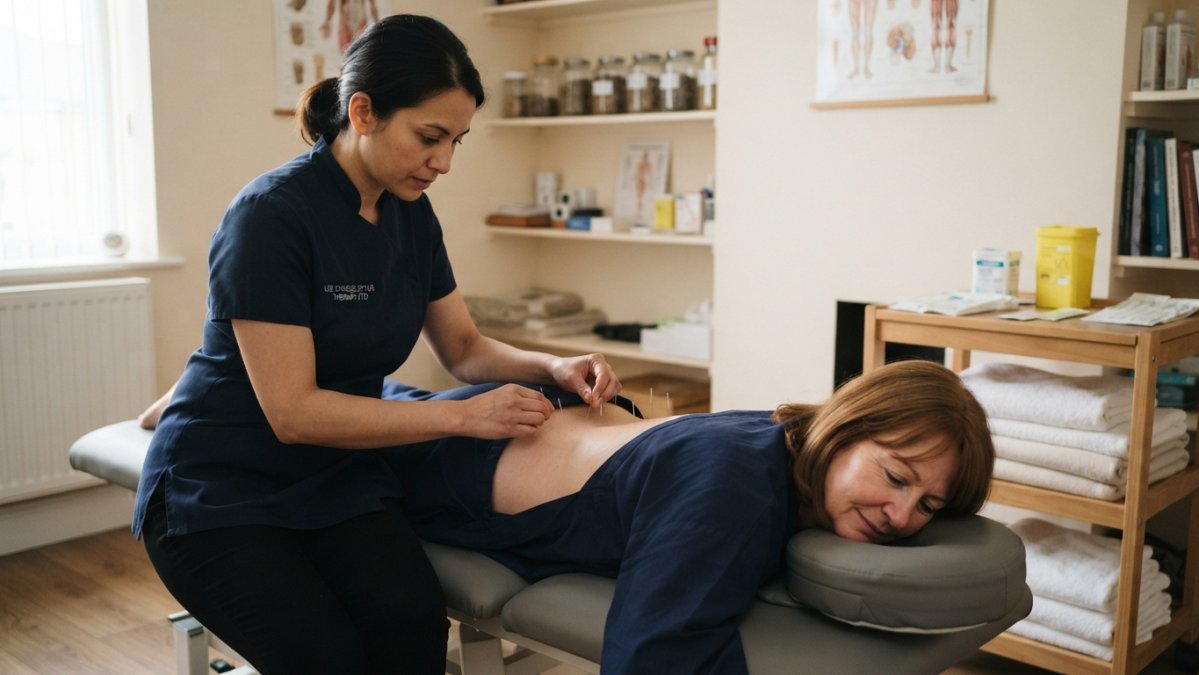
Acupuncture should be delivered by a trained practitioner. Mild bruising or soreness at the needle site can occur (Acupuncture). It should be avoided over infected or broken skin, and used with caution if you take anticoagulants because of the bleeding risk. In pregnancy, treatment is often modified and should only proceed after medical clearance.
A useful way to think about suitability is by treatment rather than by symptom. If you are on multiple prescribed medicines, herbal medicine needs closer scrutiny and may not be the right first choice. If you are anxious about needles or have a bleeding disorder, acupuncture may be less suitable. Many people safely combine both under one plan, but that decision should be made with a practitioner who can see your full medication list and with your GP informed.
Watch out: herbs are not automatically safer because they are natural, and combining them with prescribed medication without checking is the most common avoidable risk. If you are unsure whether either treatment is appropriate for you, seek medical advice before booking.
Choosing Between Acupuncture and Herbal Medicine for Your Symptoms
Choosing between the two comes down to your symptoms, your routine and what you can commit to. Some women do better with acupuncture because they want regular in-clinic support; others prefer herbs because they can take them at home. If you are weighing up your options, our Chinese medicine treatments page sets out the full range we offer.
Booking a Consultation to Discuss Your Hormonal Symptoms
A consultation is where the real answer begins. At Lee Chinese Style Therapy Ltd, we take a full history, assess your pattern and explain what treatment may involve, what it can realistically help with and what to expect. Your plan is built around you, and we are happy to answer questions before you commit. Book a consultation at our clinic through our appointment booking page and take the first step.
Hormonal symptoms rarely have a single quick fix, and the right starting point is a proper conversation with a qualified practitioner. Lee Chinese Style Therapy Ltd combines acupuncture, cupping, Tui Na and tailored herbal support, with each plan built around your history and goals. Get started with Lee Chinese Style Therapy Ltd and book a consultation to discuss your symptoms.
Frequently Asked Questions
Can acupuncture and Chinese herbal medicine be used together?
Yes, and in Traditional Chinese Medicine they are often combined. A practitioner may use acupuncture to address how your body responds in the moment while a personalised herbal formula works on a longer timeline. The key is that one practitioner reviews both, so the herbs, the needle points and any prescribed medication are considered together rather than in isolation. Tell every practitioner involved about all medicines and supplements you take, including any herbal products bought elsewhere.
Is acupuncture or herbal medicine better for menopause symptoms?
It depends on your symptoms and circumstances. Acupuncture is often chosen for symptoms such as hot flushes, sleep disruption and mood swings. Chinese herbs for hormone balance can be tailored closely to your pattern but need proper review if you take medication, because some herbs affect how drugs are processed. Many people try acupuncture first for symptom relief and add herbs later. A consultation can help you decide which suits your situation.
Are Chinese herbs safe to take alongside prescribed medicines?
Not automatically. Some herbs can interact with medicines, including blood thinners, thyroid medication, blood pressure drugs and hormone treatments, either by changing how the drug is broken down or by adding to its effect. Always disclose your full medication list, including over-the-counter products and supplements, before starting a herbal formula. A qualified practitioner will check for interactions and adjust the formula, and your GP should be told about any herbal treatment you begin.
How long might treatment take to affect hormonal symptoms?
Timelines vary by person and symptom. Timelines for any treatment plan are set individually by your practitioner at your first appointment. Because two people with the same complaint can have different underlying patterns, a practitioner should set realistic expectations at your first appointment rather than promising a fixed number of sessions.