 how-to
Acupuncture for Knee Pain Relief: A Beginner's Guide
Table of Contents
- Does Acupuncture Work for Knee Pain?
- What to Expect from Acupuncture: Your First Appointment
- How Long Does Acupuncture Take to Work for Knee Pain?
- Acupuncture Needles and Bruising: What's Normal and What's Not
- How Acupuncture Fits Alongside Standard Knee Care
- Choosing a Qualified Acupuncturist for Knee Pain Relief
- Conclusion: Your Next Step Towards Pain Relief
- Frequently Asked Questions
Last Updated: October 6, 2026
Does Acupuncture Work for Knee Pain?
If you have knee pain and you are wondering whether acupuncture for knee pain relief is worth trying, the honest answer is: for many people it helps, but it is not a guaranteed fix.
Acupuncture is a traditional Chinese medicine treatment where very fine, single-use needles are placed into specific points on the body to influence pain signals and muscle tension. It is most often used alongside, not instead of, standard medical care.
Here is the key point for anyone nervous about needles: acupuncture is not painful in the way an injection is.
So what does the evidence say? Let's look at it properly.
What the Evidence Says About Acupuncture and Knee Osteoarthritis
The research on acupuncture and knee osteoarthritis is mixed, but it is not empty. Several randomised trials and systematic reviews have found that acupuncture can reduce knee pain and improve joint function compared with no treatment or usual care.
That is not a reason to dismiss it. It is a reason to be realistic.
- Best evidence: acupuncture added to standard care for knee osteoarthritis
- Weaker evidence: acupuncture as a standalone cure for structural knee damage
- Honest position: it may reduce pain and stiffness, and it may improve mobility, but it will not reverse arthritis
Guidance from UK health bodies generally treats acupuncture as a possible option for chronic musculoskeletal pain rather than a first-line treatment. The National Institute for Health and Care Excellence guidance on chronic pain is worth reading if you want the official position.
What to Expect from Acupuncture: Your First Appointment
Your first appointment usually lasts longer than follow-up sessions because we need to understand your knee pain fully before any needles come out.
Then comes the part nervous patients worry about most.
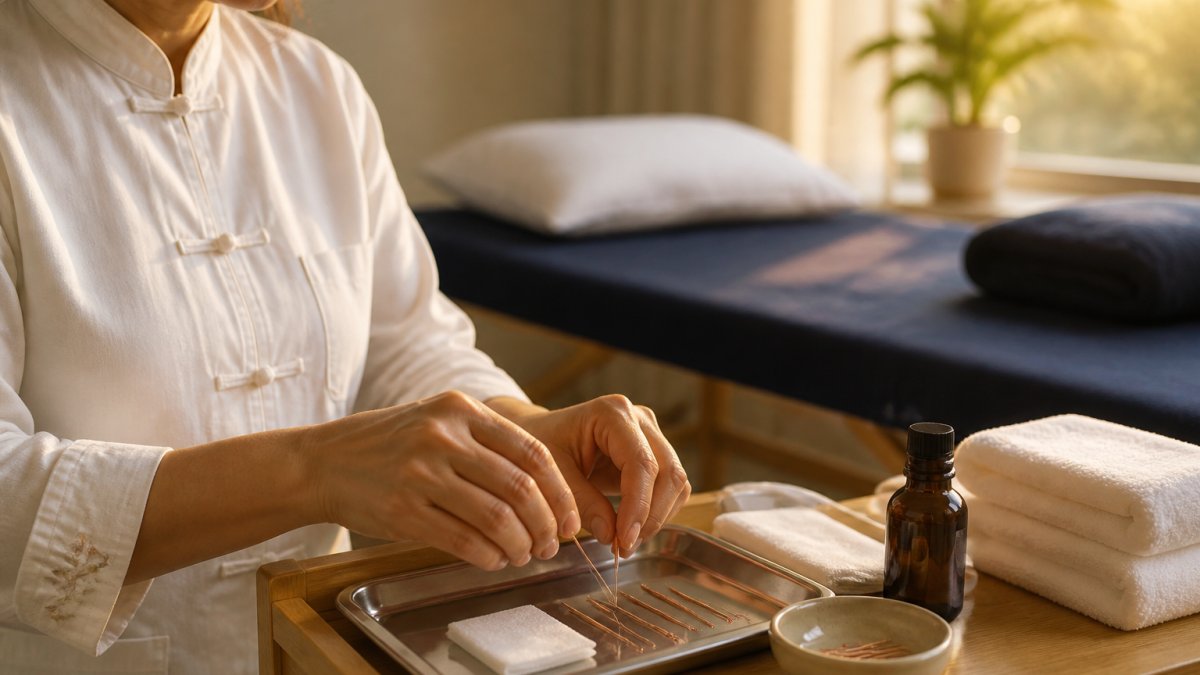
The needles we use for acupuncture are extremely fine, far thinner than a blood test needle. They are sterile and single-use. You will feel the practitioner place them, but the sensation is usually a brief ache or tingle rather than sharp pain. Nothing is injected.
Preparing for Your Session: A Simple Checklist
A little preparation makes your first session smoother. Use this checklist:
- Wear loose trousers or shorts so your knee is easy to reach
- Eat something light an hour or two before, do not arrive hungry
- Avoid alcohol on the day of treatment
- Bring a list of your medications and any recent scans or letters
- Tell the practitioner if you are pregnant, on blood thinners, or have a pacemaker
- Allow extra time so you are not rushing afterwards
- Plan a quiet evening, some people feel pleasantly relaxed or slightly sleepy
What Happens During the Session
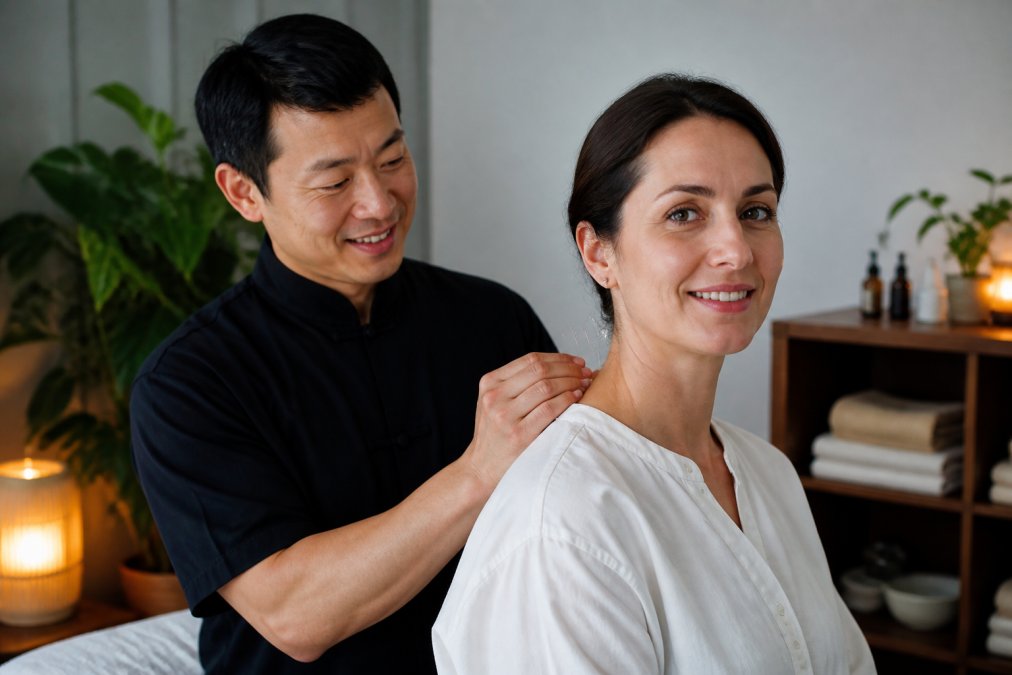
You will usually lie or sit on a treatment couch with your knee supported. The practitioner cleans the skin, then places fine needles at points around the knee and sometimes further up the leg or on the opposite knee. You may feel a brief dull ache or tingle as each needle goes in, this is normal and passes in seconds.
Nothing is injected, and the needles are not hollow like a blood test or vaccination needle. That is why acupuncture is not painful in the way an injection is. If you feel sharp pain at any point, tell your practitioner, they can adjust or remove the needle immediately.
After Your Session: What to Expect
After the needles are removed, you can drive, walk, and go about your day. Some people feel relaxed or slightly sleepy for a few hours. Others notice their knee feels looser or less achy. A few feel nothing at all after the first session, that is normal too.
You may see tiny pinprick marks where the needles entered. These are not bruises. They are simply the points where the needle passed through the skin, often faint pink or red, and they usually fade within a day. A true bruise can happen if a needle nicks a small blood vessel, but it is uncommon, harmless, and fades like any other bruise. It is not a sign of damage to your knee.
Red Flags: When to Seek Urgent Medical Advice
Acupuncture is low-risk, but knee pain itself can sometimes signal something that needs prompt medical assessment. Contact your GP, call 111, or go to your nearest urgent care service if you have:
- Severe swelling, heat, or redness around the knee that is getting worse
- Inability to bear weight on the leg, or the knee giving way
- Fever, chills, or feeling generally unwell alongside knee pain
- A knee that locks, clicks painfully, or cannot straighten
- Pain that started after a fall, twist, or impact
- Numbness, tingling, or loss of feeling in the foot or lower leg
These symptoms are not caused by acupuncture, they are reasons to get your knee checked properly before continuing with any complementary treatment. A good practitioner will always ask about these and will refer you on if needed.
How Long Does Acupuncture Take to Work for Knee Pain?
Some people notice a change after the first session. Others need several. A common pattern is that pain eases for a day or two after treatment, then gradually the good days get longer. This is how acupuncture for knee pain relief usually behaves.
It is rare for one session to fix long-standing knee pain. If you have had pain for months or years, expect a course rather than a one-off.
Realistic Session Plans and Tracking Your Progress
Most practitioners suggest a short course, then a review. A typical approach looks like this:
| Stage | Sessions | What to Expect |
|---|---|---|
| Initial course | 4 to 6 sessions, roughly weekly | Early changes in pain and stiffness |
| Review point | After the course | Decide whether to continue |
| Maintenance | Every 2 to 4 weeks | Hold onto the gains you have made |
Track your progress simply. Note your pain level out of ten each morning, how far you can walk without stopping, and how stiff your knee feels after sitting. Bring those notes to your review. It is the clearest way to see whether acupuncture is working for you.
Acupuncture Needles and Bruising: What's Normal and What's Not
This is the section we most want beginners to read carefully.
The small marks you sometimes see after acupuncture are usually not bruises. They are tiny pinprick points where the needle entered the skin. They are often faint, fade within a day or two, and are not a sign that anything went wrong.
A true bruise can happen, because a needle can occasionally nick a small blood vessel. It is uncommon, it is harmless, and it fades like any other bruise. It is not a sign of damage to your knee.
Normal after treatment:
- Faint pink or red pinprick marks
- Mild tenderness at a needle point
- Feeling relaxed or slightly tired
- A dull ache in the knee that settles
Contact your practitioner or GP if you notice:
- Spreading redness, heat, or swelling
- Fever or feeling unwell
- Pain that gets sharply worse rather than settling
- Bleeding that will not stop
Serious side effects are rare when treatment is given by a trained practitioner using sterile needles. The main risks are minor and short-lived.
How Acupuncture Fits Alongside Standard Knee Care
Acupuncture for knee pain relief is a complementary therapy, which means it sits alongside what your GP, physiotherapist, or consultant recommends. It does not replace them.
The strongest results tend to come from combining approaches:
- Keep moving with gentle strengthening and stretching
- Follow any physiotherapy plan you have been given
- Manage your weight if that is relevant to your knee load
- Use acupuncture to help with pain and stiffness so you can do the above
- Review your medication with your GP rather than stopping anything yourself
At Lee Chinese Style Therapy Ltd, we often combine acupuncture with other traditional techniques such as Tui Na massage and cupping to address muscle tension around the knee. You can see the full range of treatments we offer if you want to understand the options.
Choosing a Qualified Acupuncturist for Knee Pain Relief
Choosing the right practitioner matters more than choosing the nearest one. In the UK, acupuncture is not regulated in the same way as medicine, so standards depend on the practitioner's professional body and training.
Ask these questions before you book:
- Which professional body are you a member of, and are you insured?
- How much training have you completed in acupuncture?
- How many patients with knee pain have you treated?
- What is your approach if I do not respond after a few sessions?
- What are your hygiene and needle disposal procedures?
A good practitioner will answer all of these without hesitation and will be happy to explain the plan and the likely number of sessions. They will also tell you honestly if acupuncture is unlikely to help your particular knee problem.
If you want to understand how acupuncture is viewed by UK regulators and professional bodies, the British Acupuncture Council publishes standards and practitioner information.
Conclusion: Your Next Step Towards Pain Relief
Knee pain that has lasted for months is frustrating, and it is reasonable to want something that actually helps. Acupuncture for knee pain relief is a low-risk option for many people, especially when it is used alongside standard care and a proper strengthening plan.
If you are in Hull, Willerby, or across East Yorkshire and want to explore whether acupuncture could help your knee, we would be glad to talk it through.
Book a consultation with us and we will assess your knee, explain your options, and build a plan around your goals.
Frequently Asked Questions
Does acupuncture really work for knee pain?
Research shows mixed but promising results. Some randomised trials and systematic reviews suggest acupuncture can reduce knee pain and improve function, particularly for knee osteoarthritis. However, study quality varies, and some trials show similar effects to sham acupuncture. Many clinical guidelines, including those from the National Institute for Health and Care Excellence (NICE), recognise acupuncture as a potential option for chronic pain. It works best as part of a broader treatment plan alongside standard care. A consultation with a qualified practitioner can help you decide if it is right for you.
Is acupuncture painful when used for knee pain?
Most people feel little to no pain during acupuncture. The needles used are extremely fine, much thinner than those for injections or blood tests. You may feel a mild tingling, warmth, or a dull ache at the needle site, which is a sign the treatment is working. Many patients find the experience deeply relaxing and even fall asleep during sessions. If you are nervous about needles, tell your practitioner. They can explain each step and help you feel at ease.
How many acupuncture sessions might be needed for knee pain?
The number of sessions varies depending on the cause and severity of your knee pain. Your practitioner should outline a realistic plan and track changes in your pain, stiffness, and mobility. If you see no benefit after a fair trial, it may be worth discussing other options with your healthcare professional.
What should I do after acupuncture for knee pain?
After your session, you can return to normal activities, but it is wise to avoid strenuous exercise or heavy lifting for the rest of the day. Some people feel relaxed or slightly tired, so allow yourself time to rest if needed. Drink water and gentle movement, such as a short walk, can help. Keep a simple note of your pain levels and mobility over the next few days to share with your practitioner at the next appointment. This helps track whether the treatment is working for you.