
 how-to
Book Acupuncture Treatment in Hull: A Beginner's Guide
Table of Contents
- Why Book Acupuncture Treatment in Hull?
- What to Expect at an Acupuncture Appointment
- Benefits of Acupuncture for Beginners
- Acupuncture Treatment Cost in Hull: What Affects the Price
- How Many Sessions Will You Need?
- Comparing Acupuncture Styles and Evidence-Based Success Rates
- Aftercare: Looking After Yourself Post-Treatment
- How to Book Acupuncture Treatment in Hull
- Frequently Asked Questions
Last Updated: September 18, 2026
Why Book Acupuncture Treatment in Hull?
Acupuncture is a form of complementary medicine in which fine, sterile needles are inserted at specific points on the body to influence how you feel and how you move. For anyone weighing up whether to book acupuncture treatment in Hull, the practical questions are simple: what happens, what does it cost, and will it help?
At Lee Chinese Style Therapy Ltd, we see people every week who arrive with long-standing back pain, neck pain, sciatica, stress, poor sleep or menopausal symptoms, and who want to understand the process before committing. This guide walks you through each stage, from the first consultation to aftercare, so you know exactly what you are signing up for.
The honest position: acupuncture suits some people very well and others less so. The only way to know which group you fall into is a proper clinical assessment.
What to Expect at an Acupuncture Appointment
An acupuncture appointment is a structured clinical session, not a spa treatment. It has two distinct parts: a consultation and assessment, followed by the needling itself.
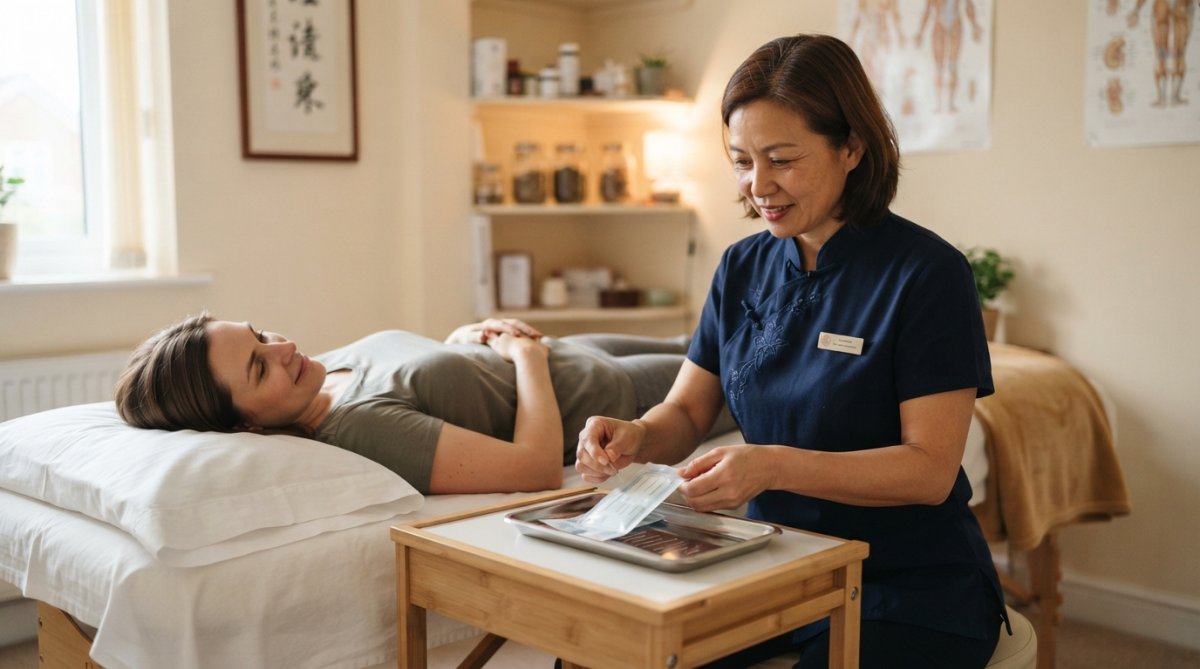
Your First Consultation and Clinical Assessment
Your first visit runs longer than follow-ups because the practitioner needs a full picture. Expect questions about your main complaint, how long you have had it, what makes it worse, your medical history, medications, sleep and stress levels.
This clinical assessment matters more than most people realise. Two patients with identical back pain can need completely different point selections depending on how they got there. Bring a list of any medication you take and mention any recent scans or diagnoses.
The Treatment Session Itself
You will usually lie on a treatment couch, partly undressed depending on the area being treated, and covered with a towel. Needles are single-use and sterile. Most people describe the sensation as a mild ache or tingling rather than sharp pain.
A common mistake is tensing up and holding your breath. Breathe normally. Needles typically stay in for around 20 to 30 minutes, and many patients find they drift off.
Benefits of Acupuncture for Beginners
For beginners, the main benefits of acupuncture tend to show up in pain management, stress relief and sleep quality rather than dramatic overnight change. If you have chronic pain, the realistic goal of early sessions is a reduction in intensity and frequency, not a cure.
Common reasons people seek treatment include:
- Chronic pain in the back, neck or shoulders
- Sciatica and nerve-related discomfort
- Stress, anxiety and tension headaches
- Insomnia and disturbed sleep
- Fatigue that does not resolve with rest
- Digestive disorders and bloating
- Menopausal symptoms such as hot flushes
- Arthritis, frozen shoulder and joint stiffness
- Sports injuries and muscle damage
Many people also use acupuncture alongside conventional care rather than instead of it. It works as complementary medicine, and your GP remains the right person for diagnosis and medical treatment.
Acupuncture Treatment Cost in Hull: What Affects the Price
Acupuncture treatment cost in Hull varies from clinic to clinic, and no single figure applies across the board. What you pay depends on several factors rather than one flat rate. As a beginner, it helps to know the typical range so you can budget and compare.
Pricing varies, and your actual cost will depend on the factors below.
The main things that move the price:
- Session length. A 30-minute session costs less than a 60-minute one. Longer sessions allow more needles and a more thorough treatment.
- First appointment versus follow-up. Initial consultations take longer because the practitioner needs a full history and assessment, so they are usually charged at a higher rate.
- Practitioner experience and qualifications. More specialised practitioners, such as those with additional training in pain management or fertility, typically charge more.
- Treatment type. Acupuncture alone usually costs less than a combined session with cupping, Tui Na massage or Gua Sha. These add-ons take extra time and skill.
- Course packages. Booking a block of sessions often works out cheaper per appointment than paying individually. For example, a block of six might save you 10-15% compared to paying one by one.
- Location and clinic overheads. Clinics in city centres or with higher rents may charge more than those in residential areas.
The fastest way to get an accurate figure is to ask directly when you book.
If you have private health insurance, check whether your policy covers acupuncture. Some policies do, especially if it is recommended by a GP or consultant. You will usually need to pay upfront and claim back, so ask the clinic for a receipt with the practitioner's registration number.
How Many Sessions Will You Need?
Here is a more detailed breakdown:
| Your situation | Typical starting point | How progress is judged |
|---|---|---|
| Recent muscle or joint pain (e.g., a strained back from lifting) | 2-4 sessions | Improvement within first few sessions; pain reduces and movement returns |
| Long-standing chronic pain (e.g., osteoarthritis, recurring back pain) | 6-8 sessions, then review | Gradual reduction in intensity and frequency; better function |
| Sciatica or nerve pain | 6-10 sessions, then review | Less shooting pain, improved mobility, reduced numbness |
| Stress, anxiety or insomnia | 4-6 sessions, then review | Better sleep, lower tension, calmer mood |
| Menopausal symptoms (hot flushes, night sweats) | 6-8 sessions, then review | Fewer flushes, improved sleep, better overall wellbeing |
| Sports injury recovery | Sessions alongside training, often 4-6 | Return to normal movement, reduced pain during activity |
Remember that everyone responds differently. Some people feel a shift after one session; others need several before noticing a change. The key is to communicate openly with your practitioner and adjust the plan based on your response.
Comparing Acupuncture Styles and Evidence-Based Success Rates
Not all acupuncture is the same, and beginners often do not realise there are different traditions. The two you are most likely to encounter are traditional Chinese medicine acupuncture and Western medical acupuncture.
Aftercare: Looking After Yourself Post-Treatment
What you do in the hours after a session affects how much you get from it. This is the part most clinics mention briefly and most patients forget entirely.
- Drink water and avoid alcohol for the rest of the day.
- Skip heavy training or intense exercise straight after treatment.
- Keep the treated area warm and avoid cold drafts.
- Expect possible mild soreness or bruising at needle sites, which usually settles quickly.
- Rest if you feel drowsy, as many people do after treatment.
- Note how you feel over the next 48 hours and report it at your next appointment.
How to Book Acupuncture Treatment in Hull
Booking is straightforward, and you do not need a GP referral to see a practitioner privately. Here is the process step by step:
- Decide what you want treated and how far you are willing to travel.
- Check the practitioner's qualifications, registration and insurance.
- Ask what a first appointment costs and how long it lasts.
- Ask how many sessions they would typically suggest for your condition.
- Book an initial consultation, which includes the clinical assessment.
- Attend, be honest about your history, and agree a review point.
- Reassess after that point and decide whether to continue.
Frequently Asked Questions
What is the typical cost of an acupuncture session in Hull?
Acupuncture treatment cost in Hull depends on the clinic, the practitioner's experience, and the length of your session. Because pricing varies, check directly with the clinic for current rates and any packages. Your first appointment often costs slightly more because it includes a full clinical assessment.
Can you get acupuncture free on the NHS?
Some NHS services offer acupuncture for specific conditions, such as chronic pain, but availability is limited and waiting lists can be long. Most people access acupuncture privately. If you are considering acupuncture treatment, ask your GP whether NHS referral is possible in your area, or book directly with a qualified practitioner. Private sessions give you more control over appointment times and treatment frequency.
What conditions can be treated by acupuncture?
Acupuncture is commonly used for chronic pain, including back pain, neck pain, sciatica, arthritis, and frozen shoulder. It also helps with stress, anxiety, insomnia, digestive disorders, and fatigue. Some people seek treatment for menopause symptoms, tinnitus, or sports injuries. A qualified practitioner will assess your individual health conditions during a consultation and discuss whether acupuncture is suitable for you.
How do I choose a qualified acupuncture practitioner?
Look for a practitioner who is registered with a professional body such as the British Acupuncture Council. Check that they hold proper qualifications, insurance, and experience treating your specific condition. A good practitioner will offer a thorough clinical assessment, explain the treatment plan clearly, and answer your questions. Do not be afraid to ask about their training and approach before you book.
Long-standing pain, stress and poor sleep are difficult to live with, and finding a practitioner you trust makes the decision much easier. At Lee Chinese Style Therapy Ltd, we combine traditional Chinese medicine with modern clinical assessment, offering acupuncture, Tui Na massage and Chinese medical cupping from our clinic in the Hull and Willerby area. Get started with Lee Chinese Style Therapy Ltd and book an initial consultation to find out whether acupuncture is right for you.