
 how-to
Find a Registered Acupuncturist in Willerby: 2026 Guide
Table of Contents
- Why Choosing a Registered Acupuncturist Matters
- How to Verify a Practitioner's Credentials Locally
- What to Expect During Your First Acupuncture Session
- Acupuncture vs Dry Needling: What's the Difference?
- Acupuncture Treatment Cost in Hull: What Affects the Price
- Accessibility, Parking, and Getting to Your Appointment
- Conclusion: Taking the Next Step
- Frequently Asked Questions
Last Updated: October 1, 2026
Why Choosing a Registered Acupuncturist Matters
Finding a registered acupuncturist in Willerby starts with one simple question: is the person treating you properly qualified? A registered acupuncturist is a practitioner who has completed recognised training and joined a professional body that sets standards for safe practice. This guide from Lee Chinese Style Therapy Ltd explains how to check credentials, what to expect, and how to book with confidence.
What Professional Registration Actually Means
Professional registration means a practitioner has met the training and safety requirements of a recognised body. In the UK, acupuncture is not yet statutorily regulated in the way medicine or nursing is, so voluntary registers do much of the quality control (Acupuncturist). Bodies such as the British Acupuncture Council and the Professional Standards Authority accredited registers maintain lists of practitioners who meet agreed standards.
Registration typically covers three things:
- Completed training at an approved institution
- Current professional indemnity insurance
- A commitment to ongoing development and a complaints process
How to Verify a Practitioner's Credentials Locally
Verification takes about ten minutes and saves a lot of uncertainty. Ask the clinic for the practitioner's registration body, then check that body's online directory yourself. A genuine registered acupuncturist will be happy to share this.
Checking Registration and Insurance
Start with the register. Most professional bodies publish a searchable list of members. If the practitioner's name appears, they are in good standing. Next, confirm insurance. Clinics should hold professional indemnity cover, and it is reasonable to ask for confirmation.
Questions to Ask Before You Book
Ask these before committing to treatment:
- Which professional body are you registered with?
- Do you hold current professional indemnity insurance?
- How many years have you practised, and what conditions do you treat most?
- What does a course of treatment typically involve?
- What are your hygiene and needle safety procedures?
A qualified professional answers these without hesitation. Evasiveness is a red flag.
What to Expect During Your First Acupuncture Session
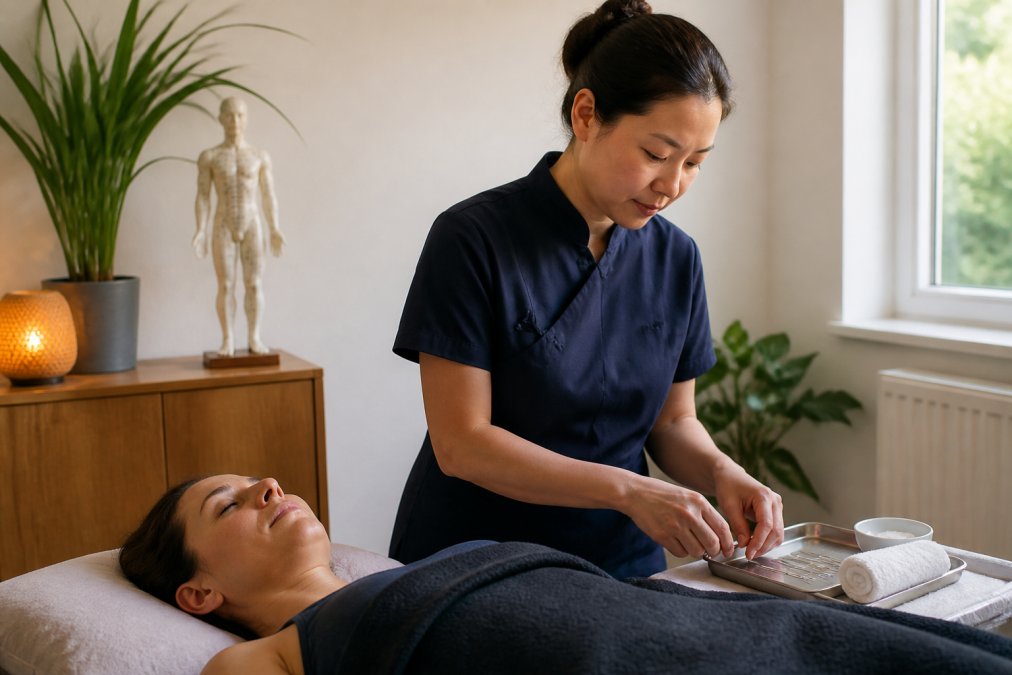
Your first session usually begins with a consultation, not a needle. The practitioner asks about your symptoms, medical history, lifestyle and any medication you take. This shapes a treatment plan suited to you.
Acupuncture vs Dry Needling: What's the Difference?
Acupuncture and dry needling both use fine needles, but they come from different traditions and aim at different things. Acupuncture is part of traditional Chinese medicine and works with a wider system of diagnosis. Dry needling is a Western technique used mainly by physiotherapists to release tight, painful muscles.
The key differences:
- Acupuncture targets specific acupuncture points to support overall balance and symptom relief
- Dry needling targets trigger points in a single muscle to ease tension and pain
- Training differs: acupuncture requires Chinese medicine study, dry needling is taught within physiotherapy
- Scope differs: acupuncture addresses whole-body patterns, dry needling focuses on one area
Acupuncture Treatment Cost in Hull: What Affects the Price
Acupuncture treatment cost in Hull varies depending on several factors, so it is worth understanding what drives the price before you book. Because acupuncture is not usually available on the NHS for most conditions, most people pay privately. That means you should know what to expect and how you might cover the cost.
Typical Price Ranges
Pricing for acupuncture sessions varies depending on the clinic, the practitioner's experience, and the length of your appointment. Some clinics may offer a reduced rate if you book a course of sessions upfront.
What Affects the Price
Several things influence what you pay:
- Session length and complexity - a 30-minute session costs less than a 60-minute one, and treatments that combine acupuncture with cupping or Tui Na massage may be priced higher.
- Practitioner experience - a practitioner with many years of training and a specialism may charge more than someone newly qualified.
- Course bookings - paying for several sessions together often reduces the cost per visit.
- Location - clinics in busy town centres may have higher overheads than those in quieter areas, which can affect the price.
Can You Get Acupuncture on the NHS?
Acupuncture is sometimes available on the NHS, but usually only for specific conditions such as chronic pain, and often through a referral from your GP or a pain clinic. Waiting lists can be long, and not all areas offer it. If you want NHS treatment, ask your GP whether acupuncture is available locally and whether you meet the criteria.
Does Private Health Insurance Cover Acupuncture?
Some private health insurance policies cover acupuncture, but only if the practitioner is registered with a recognised body such as the British Acupuncture Council or another Professional Standards Authority accredited register. Cover varies widely: some policies include acupuncture as standard, others offer it as an add-on, and some exclude it entirely. Before you book, check your policy or call your insurer to confirm:
- Whether acupuncture is covered for your condition
- Whether you need a referral from your GP first
- Which registers the insurer recognises
- How much you can claim per session and per year
How to Pay and What to Ask
Most clinics accept card payments, bank transfers, or cash. Some ask for a deposit when you book, especially for longer appointments. Always ask:
- What is the total cost for a single session and for a course?
- Do you offer any discounts for block bookings?
- What is your cancellation policy, and is there a fee?
- Do you provide receipts that I can send to my insurer?
Accessibility, Parking, and Getting to Your Appointment
Accessibility matters when you are dealing with pain or mobility issues. Willerby sits just west of Hull, with good road links and regular bus services along the main routes. If you are travelling by car, check parking arrangements with the clinic in advance, as on-street options near village centres can be limited at busy times.
Step-Free Access and Mobility
If you use a wheelchair, walker, or have difficulty with steps, ask about step-free access when you book. Not all clinics in older buildings have lifts or ground-floor treatment rooms. A good clinic will tell you honestly what access is like and may offer a ground-floor room if available. It is also worth asking:
- Is there a accessible toilet?
- Are there any steps to the entrance or treatment room?
- Is there space to manoeuvre a wheelchair or mobility aid?
Parking and Public Transport
Parking in Willerby varies. Some clinics have their own car park, while others rely on on-street parking or nearby public car parks. Bus services run along the main routes, but check timetables in advance, especially for evening or weekend appointments. If you are coming from further afield in East Yorkshire, a quick call ahead saves stress on the day.
Verifying a Practitioner's Registration Locally
Before you travel, it is worth spending ten minutes checking that your practitioner is genuinely registered. In the UK, acupuncture is not statutorily regulated, so voluntary registers do the quality control. Here is how to verify locally:
- Ask the clinic which professional body the practitioner belongs to. Common ones include the British Acupuncture Council and other Professional Standards Authority accredited registers.
- Go to that body's website and use their online directory. Search for the practitioner's name. If they appear and are in good standing, that is a positive sign.
- Check insurance. Ask for confirmation that the practitioner holds current professional indemnity insurance. A registered practitioner will have this and can provide details.
- Look for a complaints process. A reputable register will have a clear way to raise concerns if something goes wrong.
Insurance and Payment Before You Arrive
If you plan to claim through private health insurance, confirm coverage before your appointment. Most insurers require you to use a practitioner registered with a recognised body. You may also need a referral from your GP. Ask your insurer:
- Is acupuncture covered for my condition?
- Do I need a referral?
- Which registers do you recognise?
- How much can I claim per session?
Conclusion: Taking the Next Step
Choosing a registered acupuncturist in Willerby comes down to doing a little homework: check the register, confirm insurance, and ask the right questions. That ten minutes of effort protects you and points you toward a practitioner who takes safety and standards seriously.
Frequently Asked Questions
How do I verify if an acupuncturist is registered in the UK?
Check whether the practitioner is a member of a recognised professional body such as the British Acupuncture Council or the Acupuncture Society. These organisations hold registers of qualified practitioners and require members to meet specific training and safety standards. Ask to see their registration details and professional insurance certificate. A genuine registered acupuncturist will be happy to provide this information before you book. You can also verify membership directly with the relevant body.
What is the difference between acupuncture and dry needling?
Acupuncture is rooted in traditional Chinese medicine and uses fine needles placed at specific acupuncture points to influence the body's energy flow and support holistic healing. Dry needling is a Western technique that targets trigger points in tight muscles to release tension and reduce pain. While both use similar needles, the training, philosophy, and treatment goals differ. A registered acupuncturist in Willerby may use either approach depending on your condition and treatment plan.
How much does acupuncture treatment cost in Hull?
Acupuncture treatment cost in Hull varies depending on the clinic, the practitioner's experience, the length of the session, and the number of treatments in your plan. Some clinics offer package deals for a course of sessions. Because pricing depends on your specific needs, it is best to contact the clinic directly for current fees and any available packages. Lee Chinese Style Therapy Ltd can provide a personalised quote after your initial consultation.
What qualifications should I look for in an acupuncturist?
Look for a practitioner who has completed a recognised degree or diploma in acupuncture, is a member of a professional body such as the British Acupuncture Council, and holds current professional insurance. They should also have experience treating your specific condition. A qualified professional will be transparent about their training, clinical practice, and approach. Do not be afraid to ask about their credentials and how they keep their skills up to date.